Practice Non Verbal Reasoning questions on Analytical Reasoning. Each question shows a figure made of lines and shapes, and asks you to count something in it. This may be the number of triangles, squares, circles, rectangles, hexagons or straight lines. Count carefully, including the figures formed by combining smaller parts, and select the correct answer from the four alternatives.
Question 1
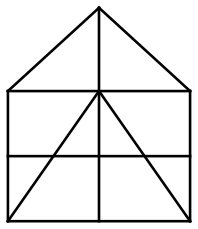
Find the minimum number of straight lines needed to draw the figure given below.
Explanation
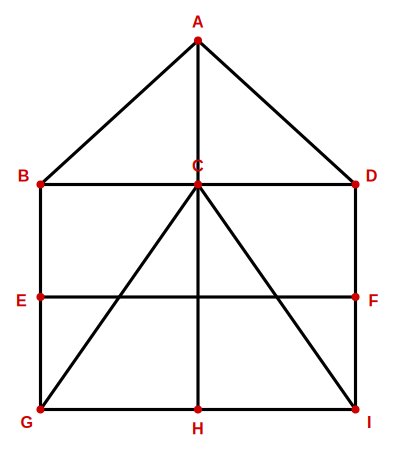
The figure may be labelled as shown in the solution image. The horizontal lines are BD, GI, EF, i.e. 3 in number. The vertical lines are DI, BG, AH, i.e. 3 in number. The slanting lines are AB, AD, CG, CI, i.e. 4 in number. Thus, there are 3 + 3 + 4 = 10 straight lines in the figure.
Question 2
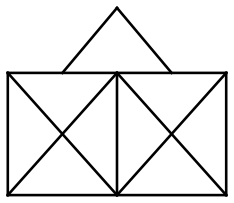
What is the least number of straight lines required to construct the figure shown below?
Explanation
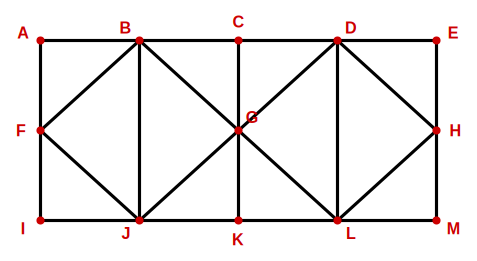
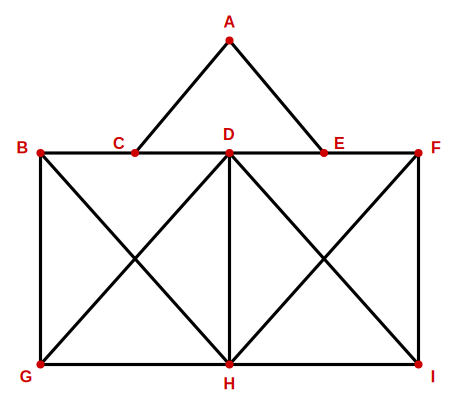
The figure may be labelled as shown in the solution image. The horizontal lines are BF, GI, i.e. 2 in number. The vertical lines are FI, BG, DH, i.e. 3 in number. The slanting lines are BH, DG, DI, FH, AC, AE, i.e. 6 in number. Thus, there are 2 + 3 + 6 = 11 straight lines in the figure.
Question 3
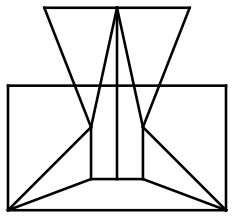
Determine the minimum number of straight lines required to make up the figure below.
Explanation
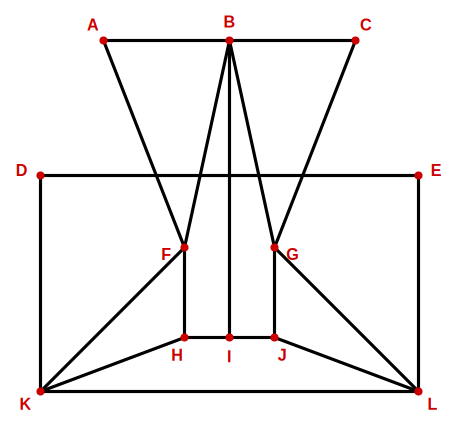
The figure may be labelled as shown in the solution image. The horizontal lines are AC, DE, HJ, KL, i.e. 4 in number. The vertical lines are DK, EL, FH, BI, GJ, i.e. 5 in number. The slanting lines are AF, BF, BG, CG, FK, HK, GL, JL, i.e. 8 in number. Thus, there are 4 + 5 + 8 = 17 straight lines in the figure.
Question 4
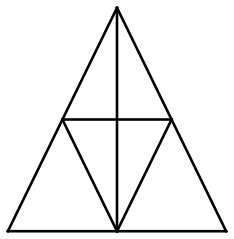
Study the figure given below and find the total number of triangles it contains.
Explanation
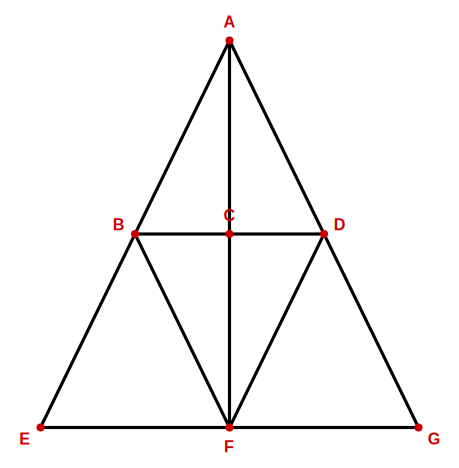
The figure may be labelled as shown in the solution image. The triangles are: AEG, AEF, AGF, ABD, ABF, ABC, ADF, ADC, EBF, GDF, BDF, BFC, DFC. Thus, there are 13 triangles in the figure.
Question 5
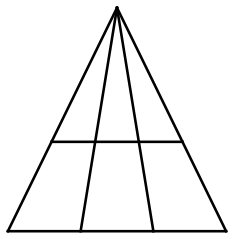
Examine the figure carefully and count the total number of triangles present in it.
Explanation
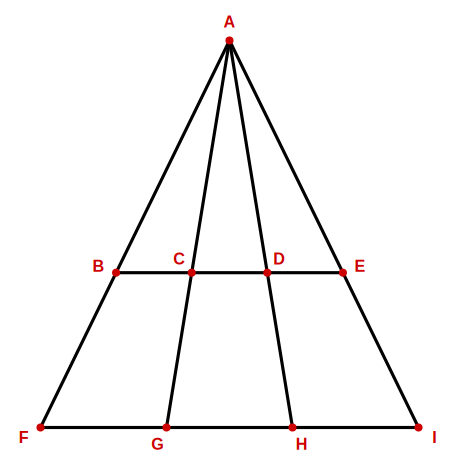
The figure may be labelled as shown in the solution image. The triangles are: AFI, AFG, AFH, AIG, AIH, AGH, ABE, ABC, ABD, AEC, AED, ACD. Thus, there are 12 triangles in the figure.
Question 6
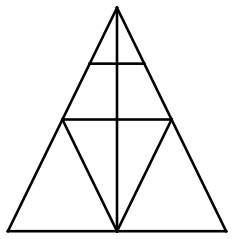
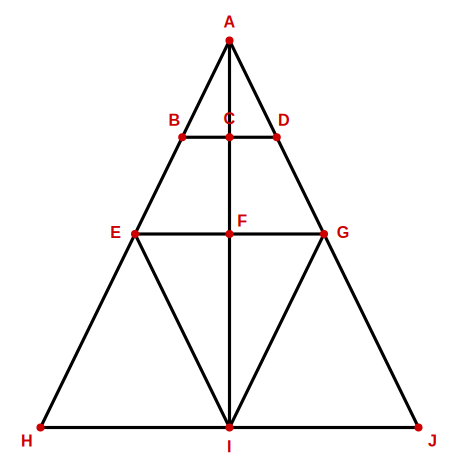
In the figure given below, find out how many triangles it contains in total.
Explanation
The figure may be labelled as shown in the solution image. The triangles are: AHJ, AHI, AJI, AEG, AEI, AEF, AGI, AGF, ABD, ABC, ADC, HEI, JGI, EGI, EIF, GIF. Thus, there are 16 triangles in the figure.
Question 7
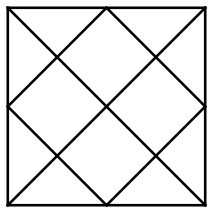
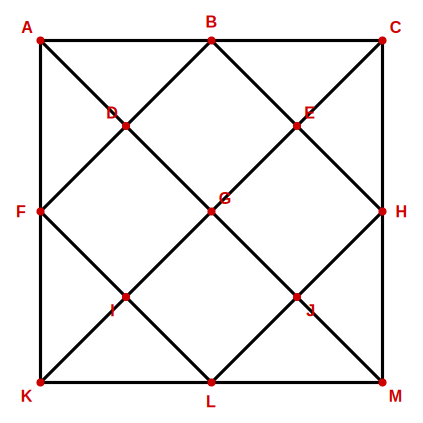
Look at the figure below and determine the total number of triangles formed in it.
Explanation
The figure may be labelled as shown in the solution image. The triangles are: ACM, ACK, ACG, AMK, AKG, ABF, ABD, AFD, CMK, CMG, CBH, CBE, CHE, MKG, MHL, MHJ, MLJ, KLF, KLI, KFI. Thus, there are 20 triangles in the figure.
Question 8
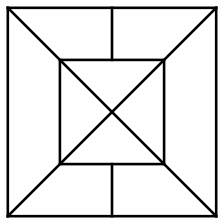
The figure below is divided by several lines. Find the total number of triangles in it.
Explanation
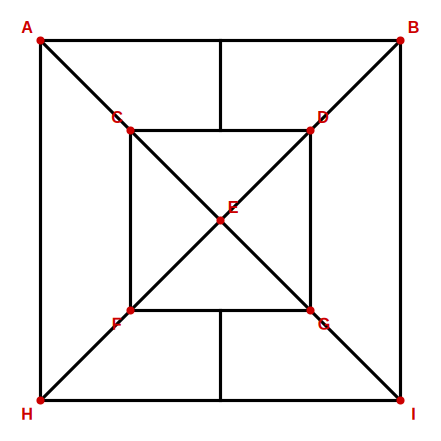
The figure may be labelled as shown in the solution image. The triangles are: ABI, ABH, ABE, AIH, AHE, BIH, BIE, IHE, CDG, CDF, CDE, CGF, CFE, DGF, DGE, GFE. Thus, there are 16 triangles in the figure.
Question 9
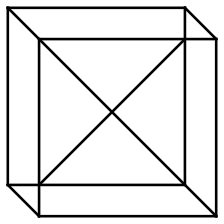
Carefully observe the given figure and count the number of triangles present.
Explanation
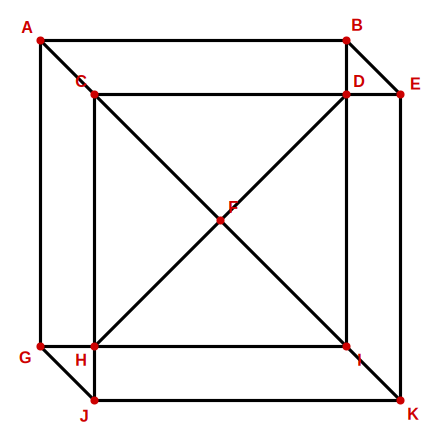
The figure may be labelled as shown in the solution image. The triangles are: ABI, AIG, BED, ICH, ICD, IHD, IHF, IDF, GJH, CEK, CKJ, CHD, CHF, CDF. Thus, there are 14 triangles in the figure.
Question 10
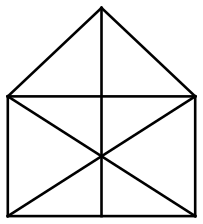
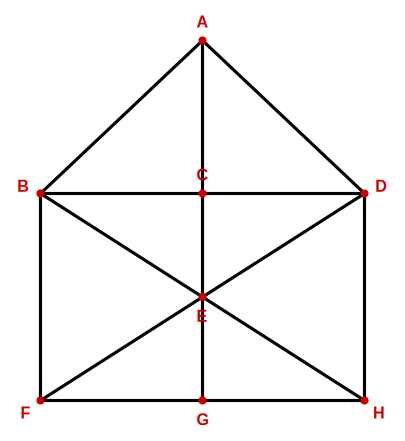
How many triangles can be counted in the figure given below?
Explanation
The figure may be labelled as shown in the solution image. The triangles are: BDH, BDF, BDA, BDE, BHF, BFE, BAC, BAE, BCE, DHF, DHE, DAC, DAE, DCE, HFE, HGE, FGE. Thus, there are 17 triangles in the figure.
Question 11
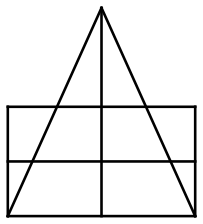
Analyse the figure below and find the total number of triangles it contains.
Explanation
The figure may be labelled as shown in the solution image. The triangles are: BLC, FNE, NLA, NAM, NKJ, LAM, LGH, ACE, ACD, AED, AHJ, AHI, AJI. Thus, there are 13 triangles in the figure.
Question 12
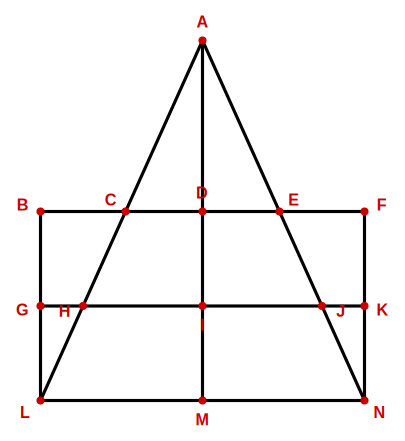
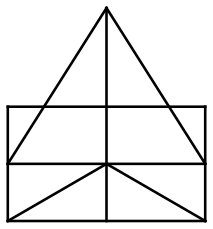
Work out the total number of triangles present in the figure shown below.
Explanation
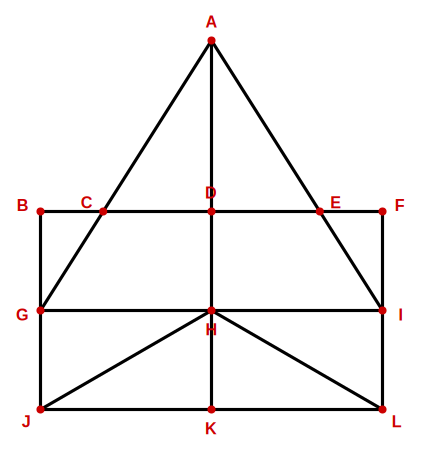
The figure may be labelled as shown in the solution image. The triangles are: BGC, FIE, LJH, LIH, LKH, JGH, JKH, AGI, AGH, AIH, ACE, ACD, AED. Thus, there are 13 triangles in the figure.
Question 13
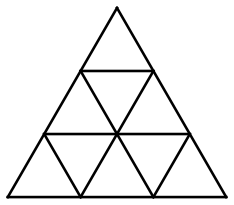
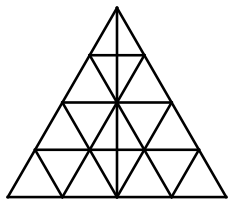
Count the minimum number of straight lines that must be drawn to form the figure given below.
Explanation
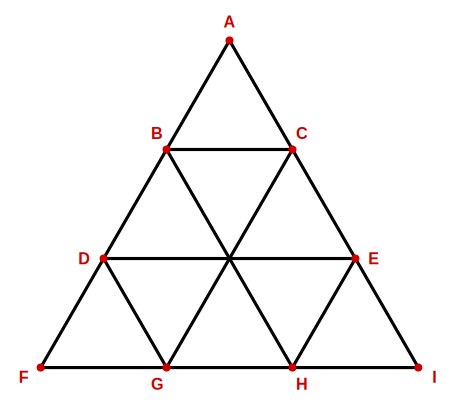
The figure may be labelled as shown in the solution image. The horizontal lines are BC, DE, FI, i.e. 3 in number. The slanting lines are AF, AI, CG, BH, EH, DG, i.e. 6 in number. Thus, there are 3 + 6 = 9 straight lines in the figure.
Question 14
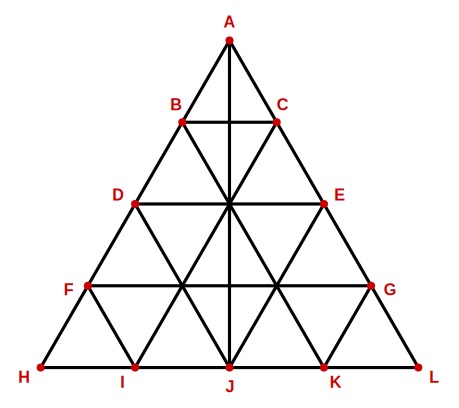
Work out the least possible number of straight lines used to draw the figure below.
Explanation
The figure may be labelled as shown in the solution image. The horizontal lines are BC, DE, FG, HL, i.e. 4 in number. The vertical lines are AJ, i.e. 1 in number. The slanting lines are AH, AL, CI, BK, EJ, DJ, GK, FI, i.e. 8 in number. Thus, there are 4 + 1 + 8 = 13 straight lines in the figure.
Question 15
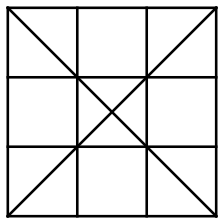
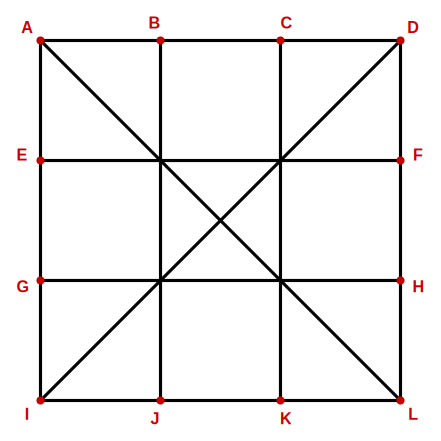
Find the minimum number of straight lines that make up the figure shown below.
Explanation
The figure may be labelled as shown in the solution image. The horizontal lines are AD, IL, EF, GH, i.e. 4 in number. The vertical lines are DL, AI, BJ, CK, i.e. 4 in number. The slanting lines are AL, DI, i.e. 2 in number. Thus, there are 4 + 4 + 2 = 10 straight lines in the figure.
Question 16
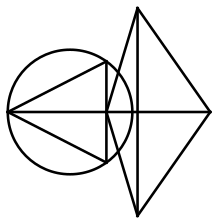
The given figure below is made up of several intersecting lines. Count the total number of triangles in it.
Explanation
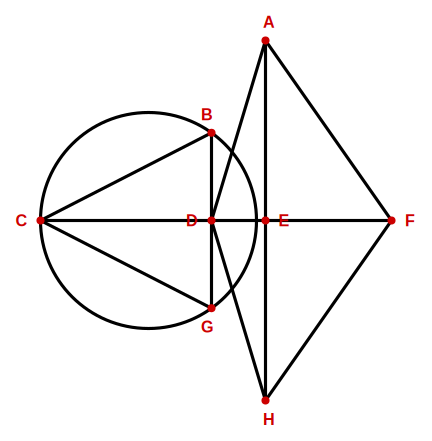
The figure may be labelled as shown in the solution image. The triangles are: AFH, AFD, AFE, AHD, ADE, FHD, FHE, HDE, DCB, DCG, CBG. Thus, there are 11 triangles in the figure.
Question 17
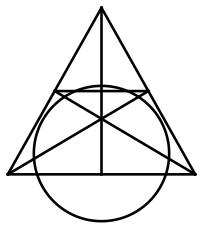
Count all the triangles, of every size, present in the figure given below.
Explanation
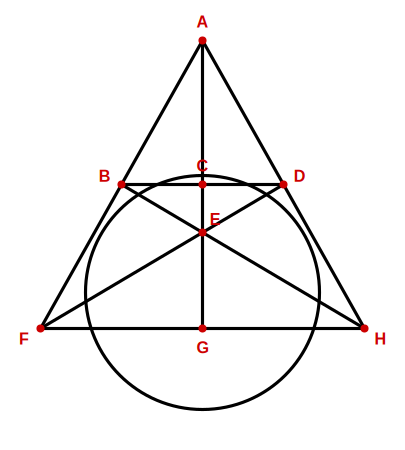
The figure may be labelled as shown in the solution image. The triangles are: AHF, AHG, AHB, AHE, AFG, AFD, AFE, ABD, ABC, ABE, ADC, ADE, HFB, HFD, HFE, HGE, HBD, HDE, FGE, FBD, FBE, BDE, BCE, DCE. Thus, there are 24 triangles in the figure.
Question 18
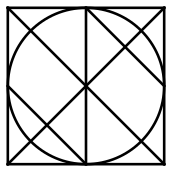
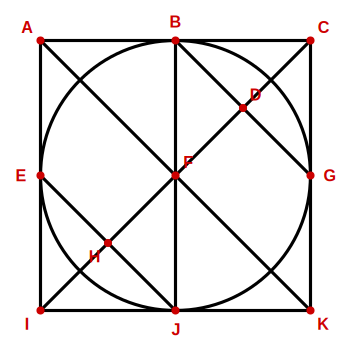
Find out the exact number of triangles contained in the figure shown below.
Explanation
The figure may be labelled as shown in the solution image. The triangles are: ACK, ACI, ACF, AKI, AIF, ABF, CKI, CKF, CBG, CBF, CBD, CGD, KIF, KJF, IJE, IJF, IJH, IEH, BFD, JFH. Thus, there are 20 triangles in the figure.
Question 19
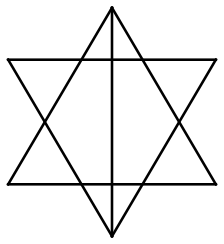
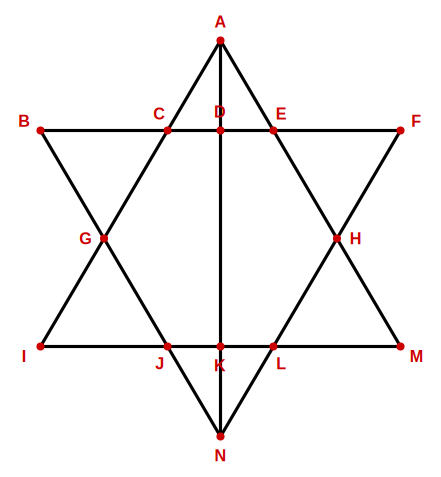
In the figure shown below, determine the total count of triangles.
Explanation
The figure may be labelled as shown in the solution image. The triangles are: AIM, AIK, AMK, ANG, ANH, ACE, ACD, AED, IGJ, MLH, NBF, NBD, NFD, NJL, NJK, NLK, BGC, FEH. Thus, there are 18 triangles in the figure.
Question 20
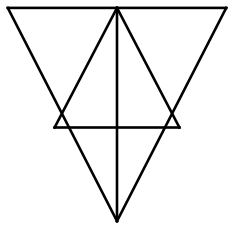
Observe the figure below closely and find the number of triangles it is made up of.
Explanation
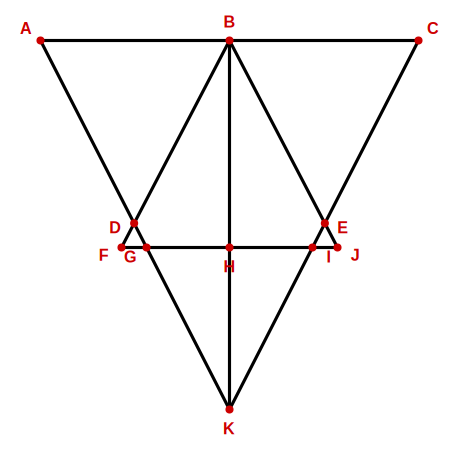
The figure may be labelled as shown in the solution image. The triangles are: ACK, AKB, ABD, CKB, CBE, KBE, KBD, KIG, KIH, KGH, BFJ, BFH, BJH, FDG, JIE. Thus, there are 15 triangles in the figure.
Question 21
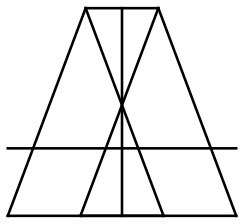
Study the given figure and work out the total number of triangles present in it.
Explanation
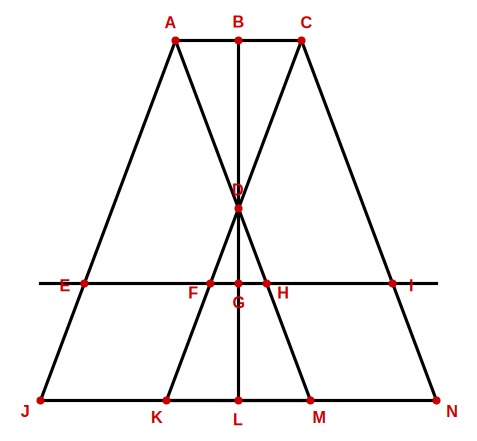
The figure may be labelled as shown in the solution image. The triangles are: AJM, ACD, ABD, AEH, MKD, MLD, CKN, CBD, CFI, KLD, DHF, DHG, DFG. Thus, there are 13 triangles in the figure.
Question 22
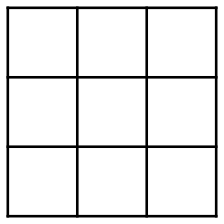
Count the total number of squares, of every size, in the figure given below.
Explanation
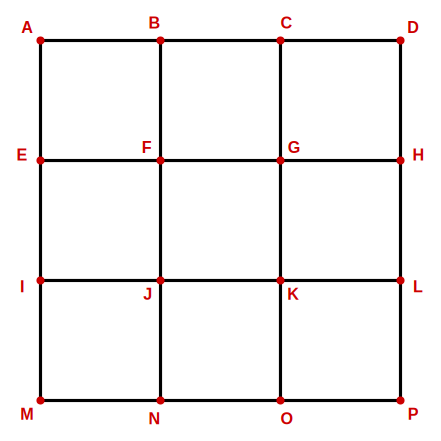
The figure may be labelled as shown in the solution image. Squares of size 1 (smallest first): ABFE, DCGH, POKL, MNJI, BCGF, NOKJ, EIJF, HLKG, FJKG, i.e. 9 in number. Squares of size 2 (smallest first): ACKI, DBJL, PNFH, MOGE, i.e. 4 in number. Squares of size 3 (smallest first): ADPM, i.e. 1 in number. Total number of squares = 9 + 4 + 1 = 14.
Question 23
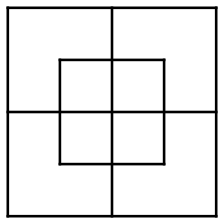
Study the figure below and find the total number of squares it contains.
Explanation
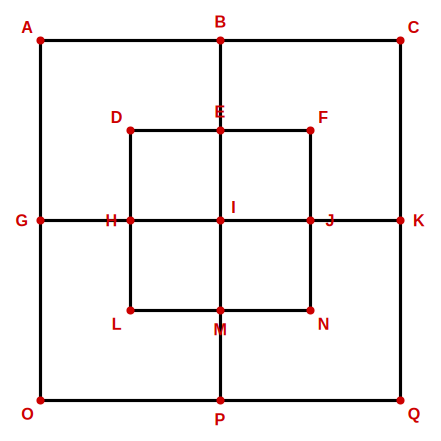
The figure may be labelled as shown in the solution image. Squares of size 1 (smallest first): DEIH, FEIJ, NMIJ, LMIH, i.e. 4 in number. Squares of size 2 (smallest first): ABIG, CBIK, QPIK, OPIG, DFNL, i.e. 5 in number. Squares of size 3 (smallest first): ACQO, i.e. 1 in number. Total number of squares = 4 + 5 + 1 = 10.
Question 24
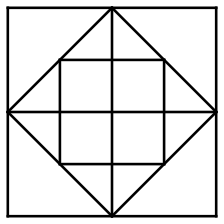
How many squares, of any size, are there in the figure given below?
Explanation
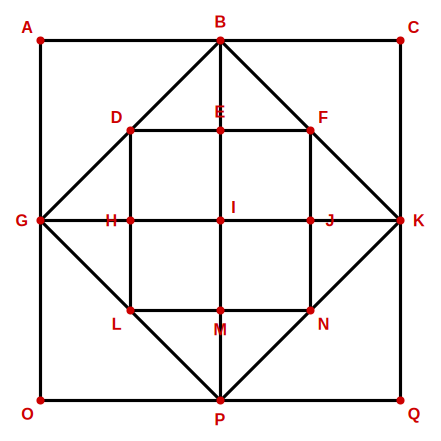
The figure may be labelled as shown in the solution image. Squares of size 1 (smallest first): DEIH, FEIJ, NJIM, LMIH, i.e. 4 in number. Squares of size 2 (smallest first): ABIG, CBIK, QKIP, OPIG, DFNL, i.e. 5 in number. Squares of size 3 (smallest first): BKPG, i.e. 1 in number. Squares of size 4 (smallest first): ACQO, i.e. 1 in number. Total number of squares = 4 + 5 + 1 + 1 = 11.
Question 25
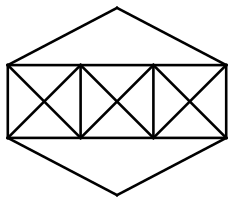
Study the figure given below and find the total number of triangles and squares it contains.
Explanation
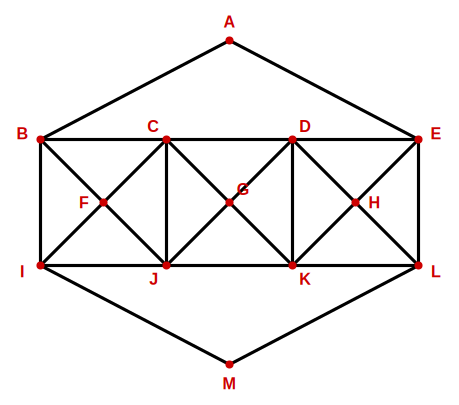
The figure may be labelled as shown in the solution image. Triangles: BEA, BIC, BIJ, BIF, BCJ, BCF, BJD, ELD, ELK, ELH, ECK, EDK, EDH, ILM, ICJ, ICK, IJF, LJD, LDK, LKH, CJD, CJK, CJF, CJG, CDK, CDG, JDK, JKG, DKG, DKH, i.e. 30 in number. Squares: BIJC, ELKD, CJKD, CFJG, DGKH, i.e. 5 in number. So there are 30 triangles and 5 squares.
Question 26
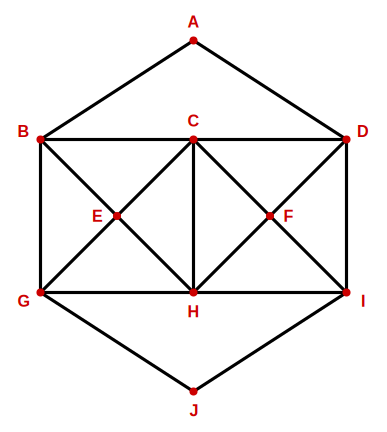
Count the number of triangles as well as squares present in the figure shown below.
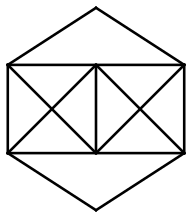
Explanation
The figure may be labelled as shown in the solution image. Triangles: BDH, BDA, BGC, BGH, BGE, BCH, BCE, DIC, DIH, DIF, DCH, DCF, GIC, GIJ, GCH, GHE, ICH, IHF, CHE, CHF, i.e. 20 in number. Squares: BGHC, DIHC, CEHF, i.e. 3 in number. So there are 20 triangles and 3 squares.
Question 27
Examine the figure below and determine the total number of triangles and squares in it.
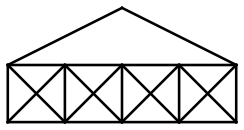
Explanation
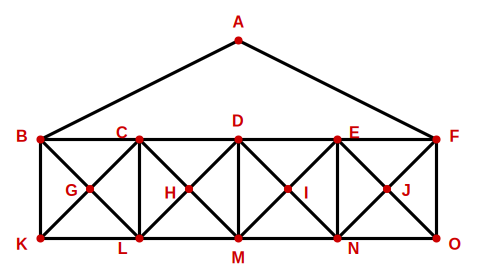
The figure may be labelled as shown in the solution image. Triangles: BFA, BKC, BKL, BKG, BCL, BCG, BLD, FOE, FON, FOJ, FDN, FEN, FEJ, KCL, KCM, KLG, OME, OEN, ONJ, CLD, CLM, CLG, CLH, CDM, CDH, CME, LDM, LDN, LMH, DME, DMN, DMH, DMI, DEN, DEI, MEN, MNI, ENI, ENJ, i.e. 39 in number. Squares: BKLC, FONE, CLMD, CGLH, DMNE, DHMI, EINJ, i.e. 7 in number. So there are 39 triangles and 7 squares.
Question 28
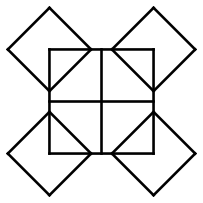
Examine the figure shown below and count the number of squares present in it.
Explanation
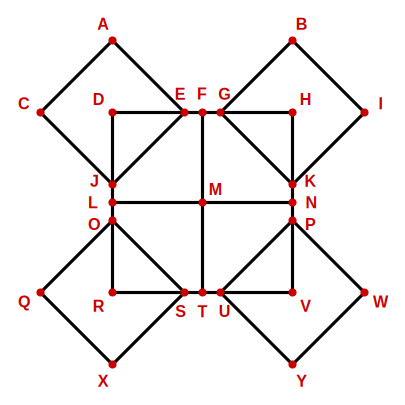
The figure may be labelled as shown in the solution image. Squares of size 1 (smallest first): DFML, HFMN, VTMN, RTML, i.e. 4 in number. Squares of size 2 (smallest first): AEJC, BIKG, PWYU, OSXQ, i.e. 4 in number. Squares of size 3 (smallest first): DHVR, i.e. 1 in number. Total number of squares = 4 + 4 + 1 = 9.
Question 29
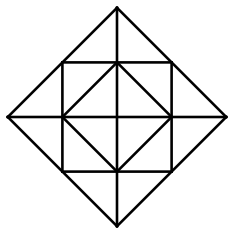
Work out the total number of squares (of all sizes) in the figure given below.
Explanation
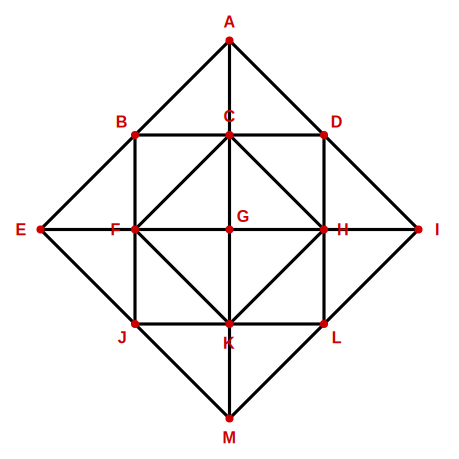
The figure may be labelled as shown in the solution image. Squares of size 1 (smallest first): BCGF, DCGH, LHGK, JKGF, i.e. 4 in number. Squares of size 2 (smallest first): CHKF, i.e. 1 in number. Squares of size 3 (smallest first): BDLJ, i.e. 1 in number. Squares of size 4 (smallest first): AIME, i.e. 1 in number. Total number of squares = 4 + 1 + 1 + 1 = 7.
Question 30
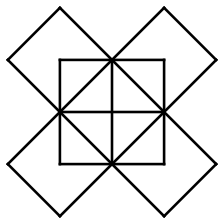
Find the exact number of squares contained in the figure shown below.
Explanation
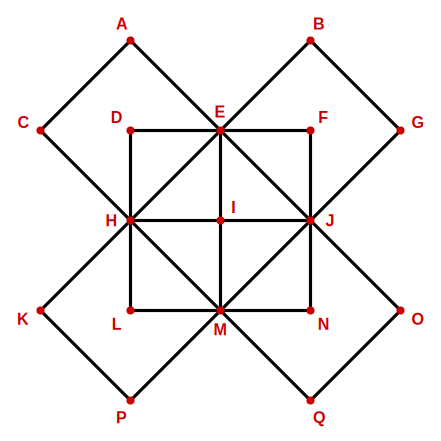
The figure may be labelled as shown in the solution image. Squares of size 1 (smallest first): EDHI, EFJI, HLMI, JNMI, i.e. 4 in number. Squares of size 2 (smallest first): AEHC, EHMJ, EBGJ, HMPK, JOQM, i.e. 5 in number. Squares of size 3 (smallest first): DFNL, i.e. 1 in number. Total number of squares = 4 + 5 + 1 = 10.
Question 31
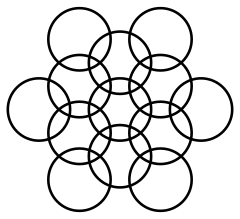
How many circles are there in the figure given below?
Explanation
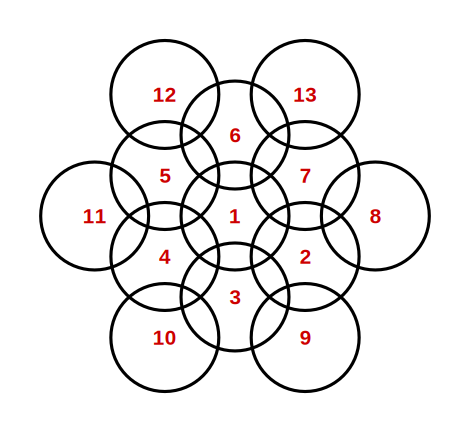
The figure may be labelled as shown in the solution image. There are 13 circles. This is clear from the solution figure, in which the circles have been numbered 1 to 13.
Question 32
Count the total number of circles present in the figure shown below.
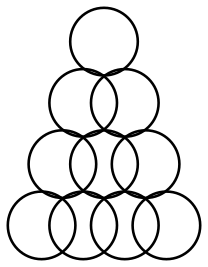
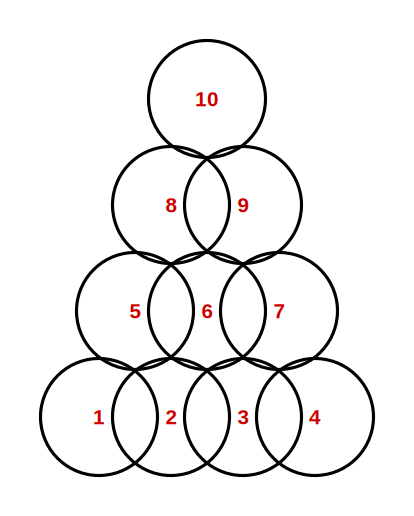
Explanation
The figure may be labelled as shown in the solution image. There are 10 circles. This is clear from the solution figure, in which the circles have been numbered 1 to 10.
Question 33
Study the figure below and find out how many circles it contains.
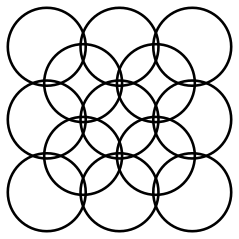
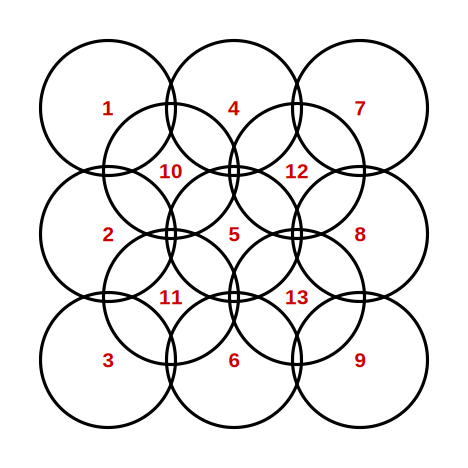
Explanation
The figure may be labelled as shown in the solution image. There are 13 circles. This is clear from the solution figure, in which the circles have been numbered 1 to 13.
Question 34
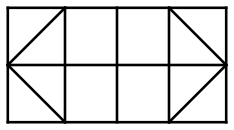
Determine the total number of rectangles and hexagons present in the figure given below.
Explanation
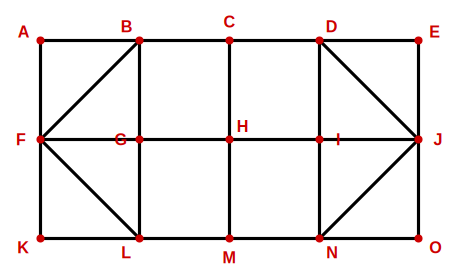
The figure may be labelled as shown in the solution image. Rectangles (squares count as rectangles): AEOK, AEJF, AKLB, AKMC, AKND, AFGB, AFHC, AFID, EOLB, EOMC, EOND, EJGB, EJHC, EJID, OKFJ, OJGL, OJHM, OJIN, KFGL, KFHM, KFIN, BLMC, BLND, BCHG, BDIG, LMHG, LNIG, CMND, CDIH, MNIH, i.e. 30 in number. Hexagons: AEJNLF, ADJOLF, ADJNLF, EJNKFB, EJNLFB, OKFBDJ, OLFBDJ, KFBDJN, FBDJNL, i.e. 9 in number. So there are 30 rectangles and 9 hexagons.
Question 35
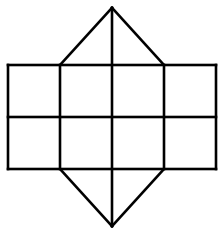
Study the figure shown below and find the number of rectangles as well as hexagons it contains.
Explanation
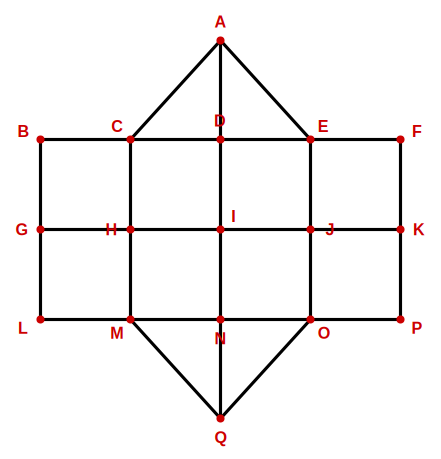
The figure may be labelled as shown in the solution image. Rectangles (squares count as rectangles): BFPL, BFKG, BLMC, BLOE, BLND, BGHC, BGJE, BGID, FPMC, FPOE, FPND, FKHC, FKJE, FKID, PLGK, PKHM, PKJO, PKIN, LGHM, LGJO, LGIN, CMOE, CMND, CEJH, CDIH, MOJH, MNIH, EOND, EDIJ, ONIJ, i.e. 30 in number. Hexagons: AEOQMC, i.e. 1 in number. So there are 30 rectangles and 1 hexagon.
Question 36
Count the total number of rectangles and hexagons in the figure given below.
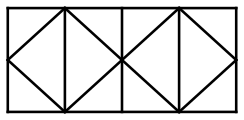
Explanation
The figure may be labelled as shown in the solution image. Rectangles (squares count as rectangles): AEMI, AIJB, AIKC, AILD, EMJB, EMKC, EMLD, BJKC, BJLD, CKLD, i.e. 10 in number. Hexagons: AEHLJF, ABGKJF, ADHMJF, ADHLJF, EHLIFB, EHLJFB, EHLKGD, MIFBDH, MJFBDH, MLGCDH, IFBCGJ, IFBDHL, BDHLJF, i.e. 13 in number. So there are 10 rectangles and 13 hexagons.