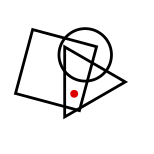
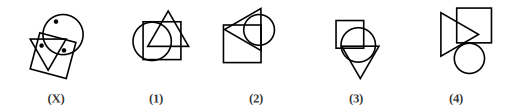
Practice Non Verbal Reasoning questions on Dot Situation, covering the position of dots inside geometric figures, regions formed by intersecting lines, relative dot locations, and identifying the correct figure based on spatial relationships. Each question shows a figure (X) with dots placed in particular regions of overlapping shapes, followed by four figures marked (1), (2), (3) and (4). Select the figure in which the dots can be placed under the same conditions as in figure (X).
Question 1
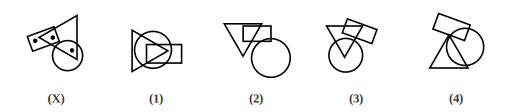
Select the figure that fulfils the same dot-placement conditions as Figure-X.
Explanation
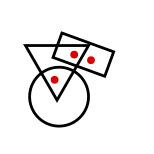
In fig. (X), one of the dots lies in the rectangle alone, another dot lies in the region common to the rectangle and the triangle only and the third dot lies in the region common to the circle and the triangle only. In each of the figures (1) and (4), there is no region common to the rectangle and the triangle only. In fig. (2), there is no region common to the circle and the triangle only. Only fig. (3) has all these types of regions. The solution image shows where the dots can be placed in fig. (3).
Question 2
Find the figure in which the dots can be placed satisfying the same conditions as Figure-X.
Explanation
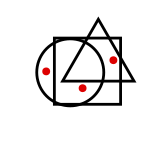
In fig. (X), one of the dots lies in the circle alone, another dot lies in the region common to the circle and the square only and the third dot lies in the region common to the square and the triangle only. In each of the figures (2) and (4), there is no region common to the circle and the square only. In fig. (3), there is no region common to the square and the triangle only. Only fig. (1) has all these types of regions. The solution image shows where the dots can be placed in fig. (1).
Question 3
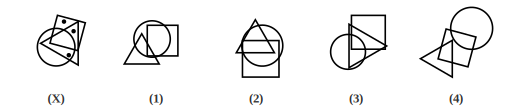
Choose the figure that has all the regions required for placing the dots as in Figure-X.
Explanation
In fig. (X), one of the dots lies in the square alone, another dot lies in the region common to the square and the triangle only and the third dot lies in the region common to the circle and the triangle only. In each of the figures (1) and (2), there is no region common to the square and the triangle only. In fig. (4), there is no region common to the circle and the triangle only. Only fig. (3) has all these types of regions. The solution image shows where the dots can be placed in fig. (3).
Question 4
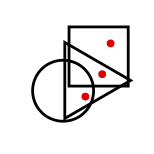
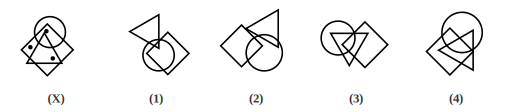
Determine the figure that allows the same placement of dots as Figure-X.
Explanation
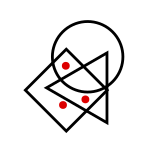
In fig. (X), one of the dots lies in the diamond alone, another dot lies in the region common to the diamond and the triangle only and the third dot lies in the region common to the circle and the diamond only. In each of the figures (1) and (2), there is no region common to the diamond and the triangle only. In fig. (3), there is no region common to the circle and the diamond only. Only fig. (4) has all these types of regions. The solution image shows where the dots can be placed in fig. (4).
Question 5
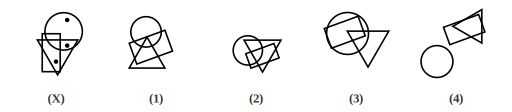
Pick out the figure in which the dots can lie in the same kinds of regions as in Figure-X.
Explanation
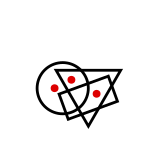
In fig. (X), one of the dots lies in the circle alone, another dot lies in the region common to the circle and the triangle only and the third dot lies in the region common to the rectangle and the triangle only. In each of the figures (1) and (4), there is no region common to the circle and the triangle only. In fig. (3), there is no region common to the rectangle and the triangle only. Only fig. (2) has all these types of regions. The solution image shows where the dots can be placed in fig. (2).
Question 6
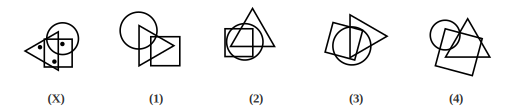
Study Figure-X and select the figure that satisfies the same dot-placement conditions.
Explanation
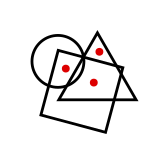
In fig. (X), one of the dots lies in the triangle alone, another dot lies in the region common to the square and the triangle only and the third dot lies in the region common to the circle and the square only. In fig. (1), there is no region common to the circle and the square only. In each of the figures (2) and (3), there is no region common to the square and the triangle only. Only fig. (4) has all these types of regions. The solution image shows where the dots can be placed in fig. (4).
Question 7
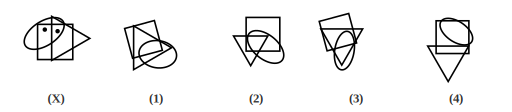
Identify the figure in which the dots can be placed by the same rule as Figure-X.
Explanation
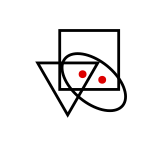
In fig. (X), one of the dots lies in the region common to the ellipse and the square only and the other dot lies in the region common to all the 3 figures - the ellipse, the square and the triangle. In each of the figures (1) and (3), there is no region common to the ellipse and the square only. In fig. (4), there is no region common to all the 3 figures - the ellipse, the square and the triangle. Only fig. (2) has all these types of regions. The solution image shows where the dots can be placed in fig. (2).
Question 8
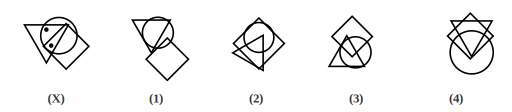
Which figure would let you place the dots under the same conditions as Figure-X?
Explanation
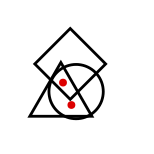
In fig. (X), one of the dots lies in the region common to the circle and the triangle only and the other dot lies in the region common to all the 3 figures - the circle, the diamond and the triangle. In fig. (1), there is no region common to all the 3 figures - the circle, the diamond and the triangle. In each of the figures (2) and (4), there is no region common to the circle and the triangle only. Only fig. (3) has all these types of regions. The solution image shows where the dots can be placed in fig. (3).
Question 9
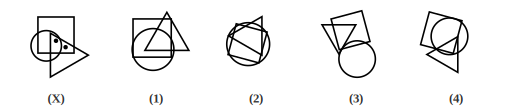
Look at how the dots are placed in Figure-X and choose the figure that satisfies the same conditions.
Explanation
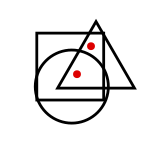
In fig. (X), one of the dots lies in the region common to the square and the triangle only and the other dot lies in the region common to all the 3 figures - the circle, the square and the triangle. In each of the figures (2) and (4), there is no region common to the square and the triangle only. In fig. (3), there is no region common to all the 3 figures - the circle, the square and the triangle. Only fig. (1) has all these types of regions. The solution image shows where the dots can be placed in fig. (1).
Question 10
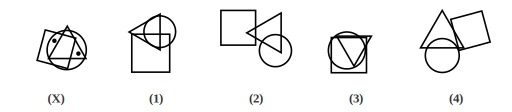
Find out which figure meets the same conditions of placing the dots as Figure-X.
Explanation
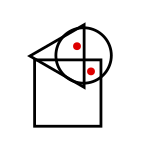
In fig. (X), one of the dots lies in the region common to the circle and the square only and the other dot lies in the region common to the circle and the triangle only. In each of the figures (2) and (4), there is no region common to the circle and the square only. In fig. (3), there is no region common to the circle and the triangle only. Only fig. (1) has all these types of regions. The solution image shows where the dots can be placed in fig. (1).
Question 11
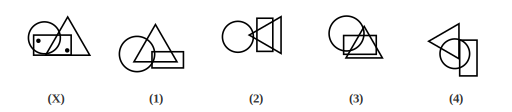
Select the figure that has the regions needed to place the dots as in Figure-X.
Explanation
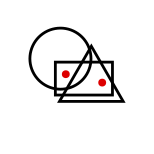
In fig. (X), one of the dots lies in the region common to the circle and the rectangle only and the other dot lies in the region common to the rectangle and the triangle only. In each of the figures (1) and (2), there is no region common to the circle and the rectangle only. In fig. (4), there is no region common to the rectangle and the triangle only. Only fig. (3) has all these types of regions. The solution image shows where the dots can be placed in fig. (3).
Question 12
Choose the figure that satisfies the conditions under which the dots are placed in Figure-X.
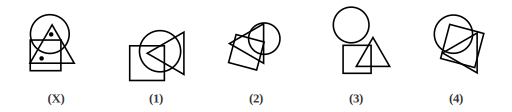
Explanation
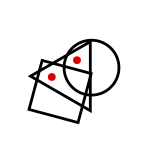
In fig. (X), one of the dots lies in the region common to the circle and the triangle only and the other dot lies in the region common to the square and the triangle only. In fig. (1), there is no region common to the square and the triangle only. In each of the figures (3) and (4), there is no region common to the circle and the triangle only. Only fig. (2) has all these types of regions. The solution image shows where the dots can be placed in fig. (2).
Question 13
In which of the figures (1) to (4) can the dots be placed in the same manner as in Figure-X?
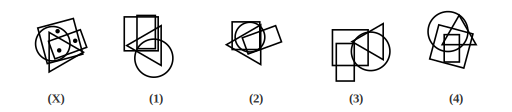
Explanation
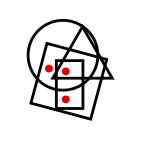
In fig. (X), one of the dots lies in the region common to the circle and the square only, another dot lies in the region common to all the 4 figures - the circle, the square, the triangle and the rectangle and the third dot lies in the region common to the square and the rectangle only. In fig. (1), there is no region common to the circle and the square only. In fig. (2), there is no region common to the square and the rectangle only. In fig. (3), there is no region common to all the 4 figures - the circle, the square, the triangle and the rectangle. Only fig. (4) has all these types of regions. The solution image shows where the dots can be placed in fig. (4).
Question 14
From the four figures, select the one that follows the same dot-placement conditions as Figure-X.
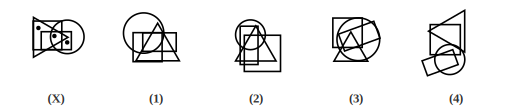
Explanation
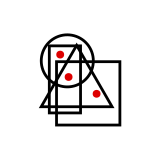
In fig. (X), one of the dots lies in the region common to the circle and the rectangle only, another dot lies in the region common to all the 4 figures - the circle, the square, the triangle and the rectangle and the third dot lies in the region common to the square and the triangle only. In fig. (1), there is no region common to the circle and the rectangle only. In fig. (3), there is no region common to the square and the triangle only. In fig. (4), there is no region common to all the 4 figures - the circle, the square, the triangle and the rectangle. Only fig. (2) has all these types of regions. The solution image shows where the dots can be placed in fig. (2).
Question 15
Determine which figure satisfies the dot-placement conditions shown in Figure-X.
Explanation
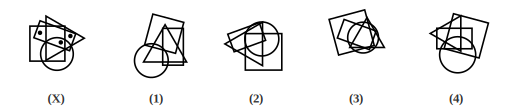
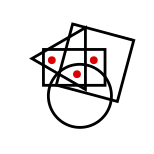
In fig. (X), one of the dots lies in the region common to the square and the rectangle only, another dot lies in the region common to all the 4 figures - the circle, the square, the triangle and the rectangle and the third dot lies in the region common to the triangle and the rectangle only. In fig. (1), there is no region common to all the 4 figures - the circle, the square, the triangle and the rectangle. In fig. (2), there is no region common to the square and the rectangle only. In fig. (3), there is no region common to the triangle and the rectangle only. Only fig. (4) has all these types of regions. The solution image shows where the dots can be placed in fig. (4).
Question 16
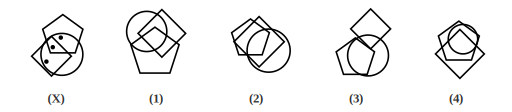
Pick the figure whose regions would let the dots sit as they do in Figure-X.
Explanation
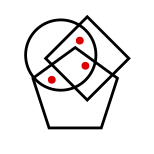
In fig. (X), one of the dots lies in the region common to the circle and the pentagon only, another dot lies in the region common to all the 3 figures - the circle, the diamond and the pentagon and the third dot lies in the region common to the circle and the diamond only. In fig. (2), there is no region common to the circle and the pentagon only. In fig. (3), there is no region common to all the 3 figures - the circle, the diamond and the pentagon. In fig. (4), there is no region common to the circle and the diamond only. Only fig. (1) has all these types of regions. The solution image shows where the dots can be placed in fig. (1).
Question 17
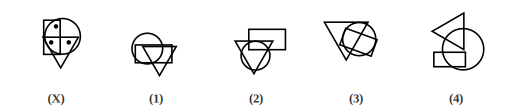
Identify the figure that meets the same dot-placement conditions as Figure-X.
Explanation
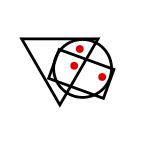
In fig. (X), one of the dots lies in the region common to the circle and the triangle only, another dot lies in the region common to all the 3 figures - the circle, the rectangle and the triangle and the third dot lies in the region common to the circle and the rectangle only. In fig. (1), there is no region common to the circle and the triangle only. In fig. (2), there is no region common to the circle and the rectangle only. In fig. (4), there is no region common to all the 3 figures - the circle, the rectangle and the triangle. Only fig. (3) has all these types of regions. The solution image shows where the dots can be placed in fig. (3).
Question 18
Find the figure in which the dots can be positioned exactly as the conditions in Figure-X require.
Explanation
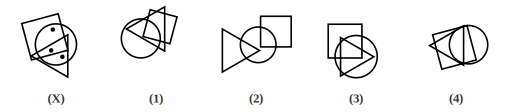
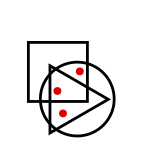
In fig. (X), one of the dots lies in the region common to the circle and the triangle only, another dot lies in the region common to all the 3 figures - the circle, the square and the triangle and the third dot lies in the region common to the circle and the square only. In fig. (1), there is no region common to the circle and the square only. In fig. (2), there is no region common to all the 3 figures - the circle, the square and the triangle. In fig. (4), there is no region common to the circle and the triangle only. Only fig. (3) has all these types of regions. The solution image shows where the dots can be placed in fig. (3).
Question 19
Which of the four figures satisfies the same conditions of dot placement as Figure-X?
Explanation
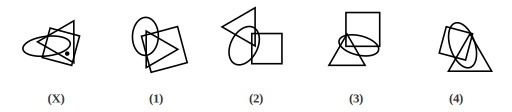
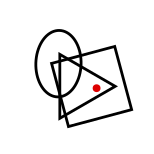
In fig. (X), the dot lies in the region common to the square and the triangle only. In each of the figures (2) and (3) and (4), there is no region common to the square and the triangle only. Only fig. (1) has all these types of regions. The solution image shows where the dots can be placed in fig. (1).
Question 20
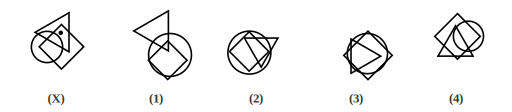
Choose the figure that allows the dots to be placed in the same way as in Figure-X.
Explanation
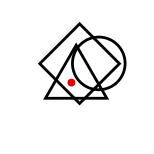
In fig. (X), the dot lies in the region common to the diamond and the triangle only. In each of the figures (1) and (2) and (3), there is no region common to the diamond and the triangle only. Only fig. (4) has all these types of regions. The solution image shows where the dots can be placed in fig. (4).
Question 21
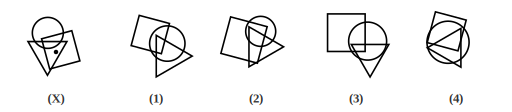
Select the figure in which the dots can be placed under the same conditions as in Figure-X.
Explanation
In fig. (X), the dot lies in the region common to the square and the triangle only. In each of the figures (1) and (3) and (4), there is no region common to the square and the triangle only. Only fig. (2) has all these types of regions. The solution image shows where the dots can be placed in fig. (2).