Practice 25 Non Verbal Reasoning questions on Mirror Images, covering mirror-image identification, left-right reversal, and position-based figure reasoning. Each question shows a figure (X) with a mirror line MN beside it, followed by four alternatives (1), (2), (3) and (4). Choose the alternative that correctly shows the mirror image of figure (X) in the line MN.
Question 1
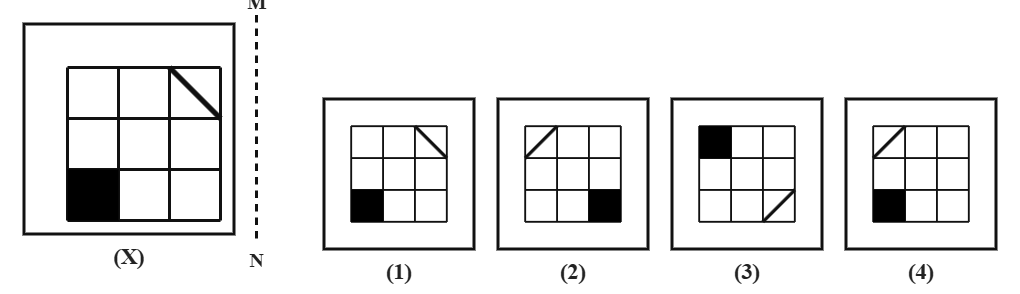
This time the mirror MN is placed to the LEFT of the 3x3 grid figure (X) shown in the diagram below. Select the option that correctly shows its mirror image.
Explanation
When a mirror is placed vertically along MN, the whole figure undergoes a lateral inversion: the grid lines themselves look the same (a uniform grid is unchanged by reflection), but the diagonal line and the shaded cell both swap sides and the diagonal's own slope direction flips.
Option 1 is simply the original grid unchanged.
Option 3 shows the grid flipped top-to-bottom instead, as for a water image, not a side mirror.
Option 4 has the diagonal correctly repositioned and flipped, but the shaded cell was left in its original corner instead of also moving to the mirrored corner.
Option 2 correctly repositions and flips both the diagonal and the shaded cell, so it is the true mirror image.
Option 1 is simply the original grid unchanged.
Option 3 shows the grid flipped top-to-bottom instead, as for a water image, not a side mirror.
Option 4 has the diagonal correctly repositioned and flipped, but the shaded cell was left in its original corner instead of also moving to the mirrored corner.
Option 2 correctly repositions and flips both the diagonal and the shaded cell, so it is the true mirror image.
Shortcut Method
Vertical mirror (MN) → grid lines unchanged, diagonal and shaded cell both move sides and flip
∴ Option 2 is the true mirror image ✓
∴ Option 2 is the true mirror image ✓
Question 2
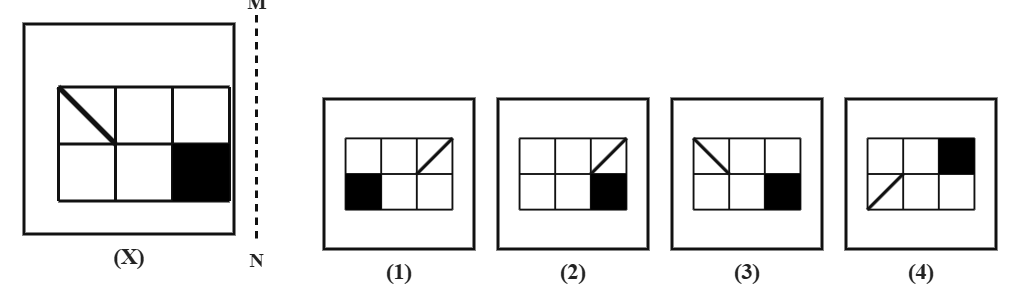
Study the 2x3 grid figure and the mirror line MN shown below. Which of the four options is its correct mirror image?
Explanation
A mirror placed vertically at MN leaves the uniform grid lines looking the same, but the diagonal line and the shaded cell both swap sides and the diagonal's slope flips.
Option 2 has the diagonal correctly repositioned and flipped, but the shaded cell was left in its original corner instead of also moving.
Option 3 is simply the original figure unchanged.
Option 4 shows the figure flipped top-to-bottom instead, as for a water image.
Option 1 correctly repositions and flips both accents, so it is the true mirror image.
Option 2 has the diagonal correctly repositioned and flipped, but the shaded cell was left in its original corner instead of also moving.
Option 3 is simply the original figure unchanged.
Option 4 shows the figure flipped top-to-bottom instead, as for a water image.
Option 1 correctly repositions and flips both accents, so it is the true mirror image.
Shortcut Method
Vertical mirror (MN) → grid lines unchanged, diagonal and shaded cell both move sides and flip
∴ Option 1 is the true mirror image ✓
∴ Option 1 is the true mirror image ✓
Question 3
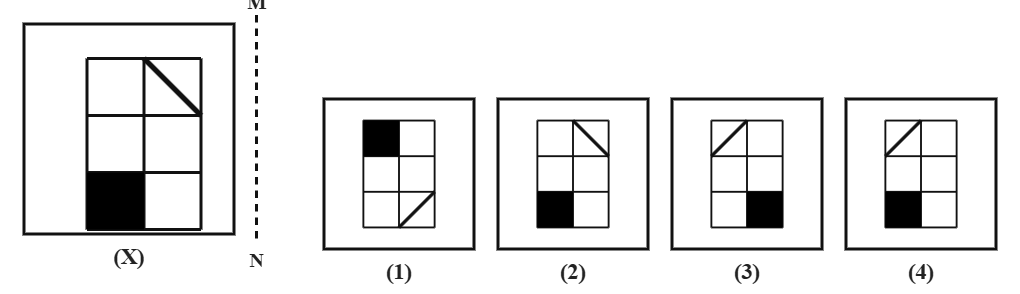
The figure below shows a 3x2 grid next to a mirror placed along MN. Choose the option that correctly represents its mirror image.
Explanation
A mirror placed vertically at MN leaves the uniform grid lines looking the same, but the diagonal line and the shaded cell both swap sides and the diagonal's slope flips.
Option 1 shows the grid flipped top-to-bottom instead, as for a water image.
Option 2 is simply the original grid unchanged.
Option 4 has the diagonal correctly repositioned and flipped, but the shaded cell was left in its original corner instead of also moving.
Option 3 correctly repositions and flips both accents, so it is the true mirror image.
Option 1 shows the grid flipped top-to-bottom instead, as for a water image.
Option 2 is simply the original grid unchanged.
Option 4 has the diagonal correctly repositioned and flipped, but the shaded cell was left in its original corner instead of also moving.
Option 3 correctly repositions and flips both accents, so it is the true mirror image.
Shortcut Method
Vertical mirror (MN) → grid lines unchanged, diagonal and shaded cell both move sides and flip
∴ Option 3 is the true mirror image ✓
∴ Option 3 is the true mirror image ✓
Question 4
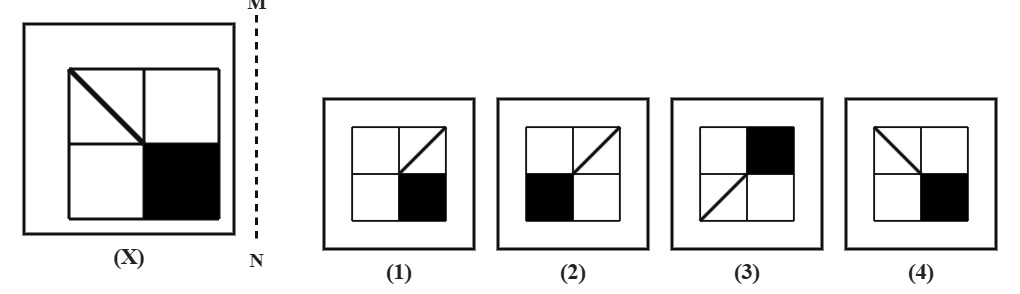
The mirror MN in the figure below is placed to the LEFT of the 2x2 grid figure this time. Which option correctly shows the reflected image?
Explanation
A mirror placed vertically at MN leaves the uniform grid lines looking the same, but the diagonal line and the shaded cell both swap sides and the diagonal's slope flips.
Option 1 has the diagonal correctly repositioned and flipped, but the shaded cell was left in its original corner instead of also moving.
Option 3 shows the grid flipped top-to-bottom instead, as for a water image.
Option 4 is simply the original grid unchanged.
Option 2 correctly repositions and flips both accents, so it is the true mirror image.
Option 1 has the diagonal correctly repositioned and flipped, but the shaded cell was left in its original corner instead of also moving.
Option 3 shows the grid flipped top-to-bottom instead, as for a water image.
Option 4 is simply the original grid unchanged.
Option 2 correctly repositions and flips both accents, so it is the true mirror image.
Shortcut Method
Vertical mirror (MN) → grid lines unchanged, diagonal and shaded cell both move sides and flip
∴ Option 2 is the true mirror image ✓
∴ Option 2 is the true mirror image ✓
Question 5
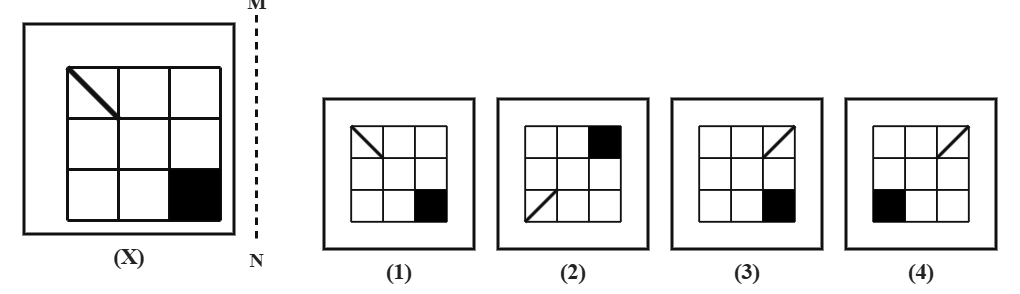
Examine the 3x3 grid figure and mirror line MN given below. Which of the options (1) to (4) is the correct mirror image?
Explanation
A mirror placed vertically at MN leaves the uniform grid lines looking the same, but the diagonal line and the shaded cell both swap sides and the diagonal's slope flips.
Option 1 is simply the original figure unchanged.
Option 2 shows the figure flipped top-to-bottom instead, as for a water image.
Option 3 has the diagonal correctly repositioned and flipped, but the shaded cell was left in its original corner instead of also moving.
Option 4 correctly repositions and flips both accents, so it is the true mirror image.
Option 1 is simply the original figure unchanged.
Option 2 shows the figure flipped top-to-bottom instead, as for a water image.
Option 3 has the diagonal correctly repositioned and flipped, but the shaded cell was left in its original corner instead of also moving.
Option 4 correctly repositions and flips both accents, so it is the true mirror image.
Shortcut Method
Vertical mirror (MN) → grid lines unchanged, diagonal and shaded cell both move sides and flip
∴ Option 4 is the true mirror image ✓
∴ Option 4 is the true mirror image ✓
Question 6
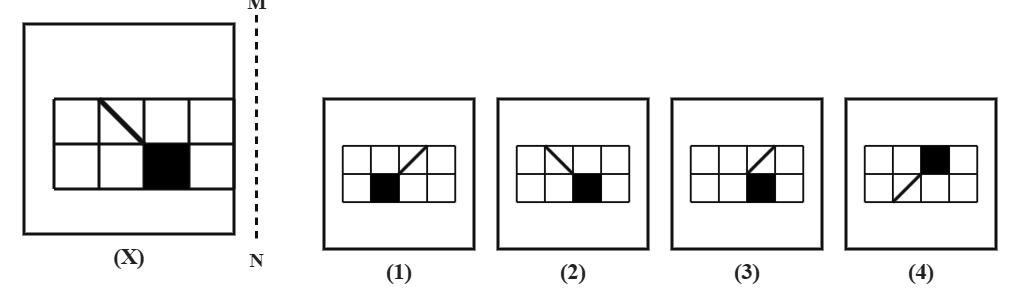
A mirror is placed along the line MN shown in the figure below. Choose the option that shows the correct mirror image of the 2x4 grid.
Explanation
A mirror placed vertically at MN leaves the uniform grid lines looking the same, but the diagonal line and the shaded cell both swap sides and the diagonal's slope flips.
Option 2 is simply the original figure unchanged.
Option 3 has the diagonal correctly repositioned and flipped, but the shaded cell was left in its original corner instead of also moving.
Option 4 shows the figure flipped top-to-bottom instead, as for a water image.
Option 1 correctly repositions and flips both accents, so it is the true mirror image.
Option 2 is simply the original figure unchanged.
Option 3 has the diagonal correctly repositioned and flipped, but the shaded cell was left in its original corner instead of also moving.
Option 4 shows the figure flipped top-to-bottom instead, as for a water image.
Option 1 correctly repositions and flips both accents, so it is the true mirror image.
Shortcut Method
Vertical mirror (MN) → grid lines unchanged, diagonal and shaded cell both move sides and flip
∴ Option 1 is the true mirror image ✓
∴ Option 1 is the true mirror image ✓
Question 7
Observe the 4x2 grid figure and the mirror line MN given below. Select the option that correctly shows the resulting mirror image.
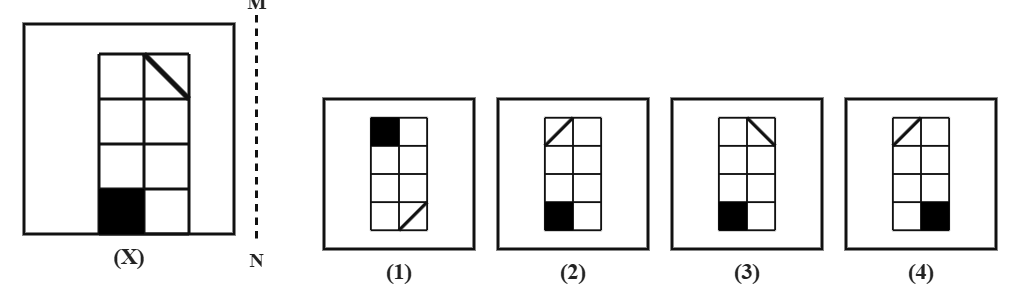
Explanation
A mirror placed vertically at MN leaves the uniform grid lines looking the same, but the diagonal line and the shaded cell both swap sides and the diagonal's slope flips.
Option 1 shows the figure flipped top-to-bottom instead, as for a water image.
Option 2 has the diagonal correctly repositioned and flipped, but the shaded cell was left in its original corner instead of also moving.
Option 3 is simply the original figure unchanged.
Option 4 correctly repositions and flips both accents, so it is the true mirror image.
Option 1 shows the figure flipped top-to-bottom instead, as for a water image.
Option 2 has the diagonal correctly repositioned and flipped, but the shaded cell was left in its original corner instead of also moving.
Option 3 is simply the original figure unchanged.
Option 4 correctly repositions and flips both accents, so it is the true mirror image.
Shortcut Method
Vertical mirror (MN) → grid lines unchanged, diagonal and shaded cell both move sides and flip
∴ Option 4 is the true mirror image ✓
∴ Option 4 is the true mirror image ✓
Question 8
A circle divided into four parts by cross-lines is shown as figure (X) below, next to a mirror placed along MN. Select its correct mirror image.
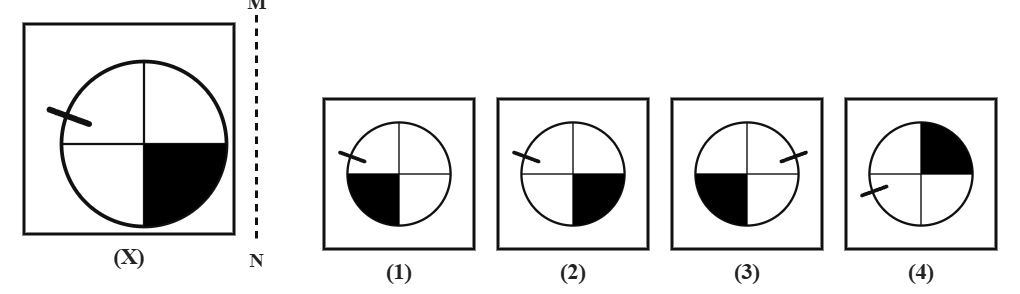
Explanation
A mirror placed vertically at MN leaves the circle outline and cross-lines looking the same, but the shaded quarter and the small tick mark both move to their mirrored positions.
Option 1 has the shaded quarter correctly repositioned, but the tick mark was left at its original spot instead of also moving.
Option 2 is simply the original figure unchanged.
Option 4 shows the figure flipped top-to-bottom instead, as for a water image.
Option 3 correctly repositions both the shaded quarter and the tick mark, so it is the true mirror image.
Option 1 has the shaded quarter correctly repositioned, but the tick mark was left at its original spot instead of also moving.
Option 2 is simply the original figure unchanged.
Option 4 shows the figure flipped top-to-bottom instead, as for a water image.
Option 3 correctly repositions both the shaded quarter and the tick mark, so it is the true mirror image.
Shortcut Method
Vertical mirror (MN) → circle outline unchanged, shaded wedge and tick mark both move to mirrored positions
∴ Option 3 is the true mirror image ✓
∴ Option 3 is the true mirror image ✓
Question 9
This circle figure has its mirror MN placed to the LEFT instead, as shown below. Which option is its true mirror image?
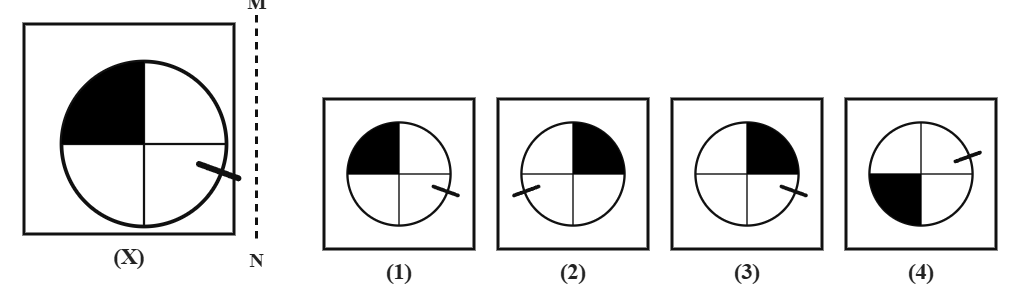
Explanation
A mirror placed vertically at MN leaves the circle outline and cross-lines looking the same, but the shaded quarter and the small tick mark both move to their mirrored positions.
Option 1 is simply the original circle unchanged.
Option 3 has the shaded quarter correctly repositioned, but the tick mark was left at its original spot instead of also moving.
Option 4 shows the circle flipped top-to-bottom instead, as for a water image.
Option 2 correctly repositions both the shaded quarter and the tick mark, so it is the true mirror image.
Option 1 is simply the original circle unchanged.
Option 3 has the shaded quarter correctly repositioned, but the tick mark was left at its original spot instead of also moving.
Option 4 shows the circle flipped top-to-bottom instead, as for a water image.
Option 2 correctly repositions both the shaded quarter and the tick mark, so it is the true mirror image.
Shortcut Method
Vertical mirror (MN) → circle outline unchanged, shaded wedge and tick mark both move to mirrored positions
∴ Option 2 is the true mirror image ✓
∴ Option 2 is the true mirror image ✓
Question 10
Given below is a circle figure (X) next to a mirror placed along MN. Choose the option that correctly shows the mirror image of the circle.
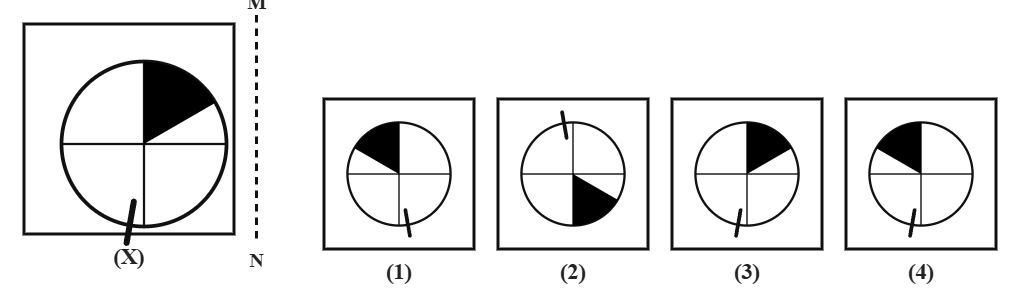
Explanation
A mirror placed vertically at MN leaves the circle outline and cross-lines looking the same, but the shaded wedge and the small tick mark both move to their mirrored positions.
Option 2 shows the circle flipped top-to-bottom instead, as for a water image.
Option 3 is simply the original circle unchanged.
Option 4 has the shaded wedge correctly repositioned, but the tick mark was left at its original spot instead of also moving.
Option 1 correctly repositions both the shaded wedge and the tick mark, so it is the true mirror image.
Option 2 shows the circle flipped top-to-bottom instead, as for a water image.
Option 3 is simply the original circle unchanged.
Option 4 has the shaded wedge correctly repositioned, but the tick mark was left at its original spot instead of also moving.
Option 1 correctly repositions both the shaded wedge and the tick mark, so it is the true mirror image.
Shortcut Method
Vertical mirror (MN) → circle outline unchanged, shaded wedge and tick mark both move to mirrored positions
∴ Option 1 is the true mirror image ✓
∴ Option 1 is the true mirror image ✓
Question 11
Study the circle figure and the mirror line MN shown below. Which of the following options is the correct mirror image?
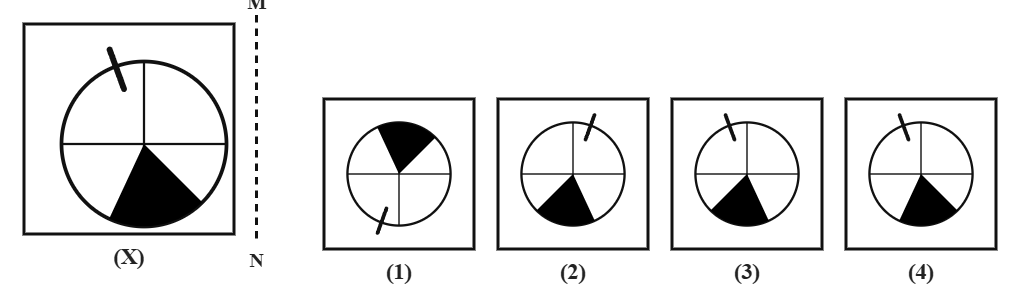
Explanation
A mirror placed vertically at MN leaves the circle outline and cross-lines looking the same, but the shaded wedge and the small tick mark both move to their mirrored positions.
Option 1 shows the figure flipped top-to-bottom instead, as for a water image.
Option 3 has the shaded wedge correctly repositioned, but the tick mark was left at its original spot instead of also moving.
Option 4 is simply the original figure unchanged.
Option 2 correctly repositions both the shaded wedge and the tick mark, so it is the true mirror image.
Option 1 shows the figure flipped top-to-bottom instead, as for a water image.
Option 3 has the shaded wedge correctly repositioned, but the tick mark was left at its original spot instead of also moving.
Option 4 is simply the original figure unchanged.
Option 2 correctly repositions both the shaded wedge and the tick mark, so it is the true mirror image.
Shortcut Method
Vertical mirror (MN) → circle outline unchanged, shaded wedge and tick mark both move to mirrored positions
∴ Option 2 is the true mirror image ✓
∴ Option 2 is the true mirror image ✓
Question 12
A square split by both its diagonals is shown as figure (X) below, next to a mirror placed along MN. Which option shows its correct mirror image?
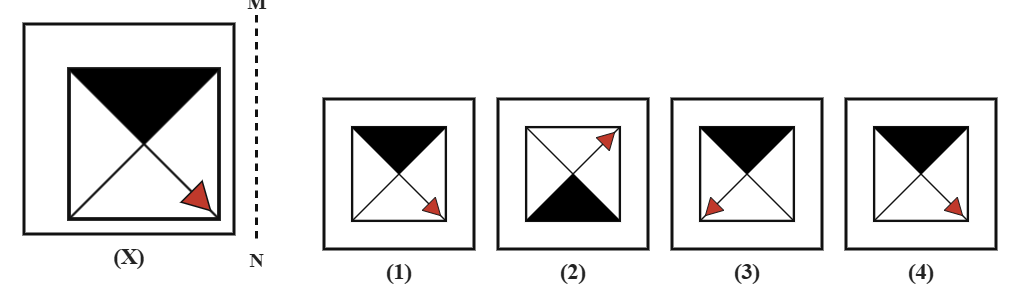
Explanation
A mirror placed vertically at MN leaves the square outline and its two diagonals looking the same, but the shaded triangle swaps to the mirrored triangle and the small corner marker moves to the mirrored corner.
Option 1 has the shaded triangle correctly repositioned, but the corner marker was left at its original corner instead of also moving.
Option 2 shows the figure flipped top-to-bottom instead, as for a water image.
Option 4 is simply the original figure unchanged.
Option 3 correctly repositions both the shaded triangle and the corner marker, so it is the true mirror image.
Option 1 has the shaded triangle correctly repositioned, but the corner marker was left at its original corner instead of also moving.
Option 2 shows the figure flipped top-to-bottom instead, as for a water image.
Option 4 is simply the original figure unchanged.
Option 3 correctly repositions both the shaded triangle and the corner marker, so it is the true mirror image.
Shortcut Method
Vertical mirror (MN) → square and diagonals unchanged, shaded triangle and corner marker both move to mirrored positions
∴ Option 3 is the true mirror image ✓
∴ Option 3 is the true mirror image ✓
Question 13
The figure below shows a diagonally split square next to a mirror placed along MN. Select the option that correctly represents its mirror image.
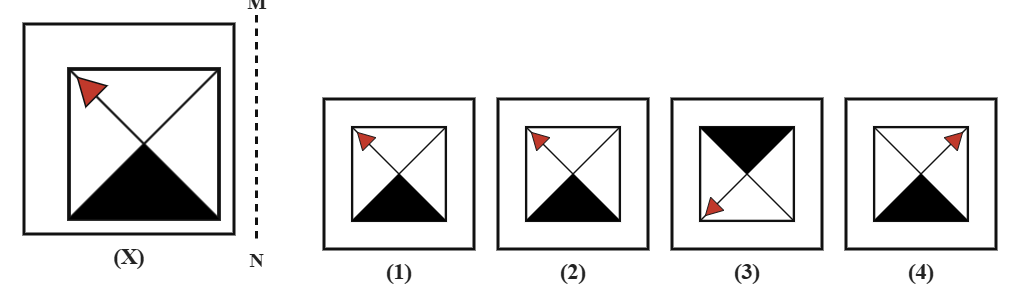
Explanation
A mirror placed vertically at MN leaves the square outline and its two diagonals looking the same, but the shaded triangle swaps to the mirrored triangle and the small corner marker moves to the mirrored corner.
Option 1 is simply the original figure unchanged.
Option 2 has the shaded triangle correctly repositioned, but the corner marker was left at its original corner instead of also moving.
Option 3 shows the figure flipped top-to-bottom instead, as for a water image.
Option 4 correctly repositions both the shaded triangle and the corner marker, so it is the true mirror image.
Option 1 is simply the original figure unchanged.
Option 2 has the shaded triangle correctly repositioned, but the corner marker was left at its original corner instead of also moving.
Option 3 shows the figure flipped top-to-bottom instead, as for a water image.
Option 4 correctly repositions both the shaded triangle and the corner marker, so it is the true mirror image.
Shortcut Method
Vertical mirror (MN) → square and diagonals unchanged, shaded triangle and corner marker both move to mirrored positions
∴ Option 4 is the true mirror image ✓
∴ Option 4 is the true mirror image ✓
Question 14
This time the mirror MN is positioned to the LEFT of the diagonally split square shown below. Which of the four options is the correct mirror image?
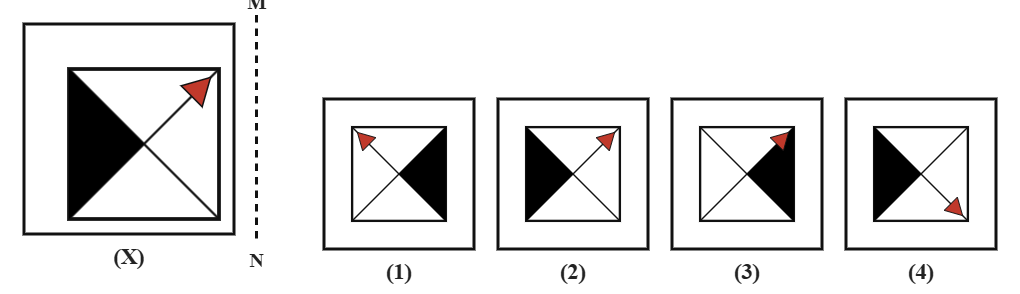
Explanation
A mirror placed vertically at MN leaves the square outline and its two diagonals looking the same, but the shaded triangle swaps to the mirrored triangle and the small corner marker moves to the mirrored corner.
Option 2 is simply the original square unchanged.
Option 3 has the shaded triangle correctly repositioned, but the corner marker was left at its original corner instead of also moving.
Option 4 shows the square flipped top-to-bottom instead, as for a water image.
Option 1 correctly repositions both the shaded triangle and the corner marker, so it is the true mirror image.
Option 2 is simply the original square unchanged.
Option 3 has the shaded triangle correctly repositioned, but the corner marker was left at its original corner instead of also moving.
Option 4 shows the square flipped top-to-bottom instead, as for a water image.
Option 1 correctly repositions both the shaded triangle and the corner marker, so it is the true mirror image.
Shortcut Method
Vertical mirror (MN) → square and diagonals unchanged, shaded triangle and corner marker both move to mirrored positions
∴ Option 1 is the true mirror image ✓
∴ Option 1 is the true mirror image ✓
Question 15
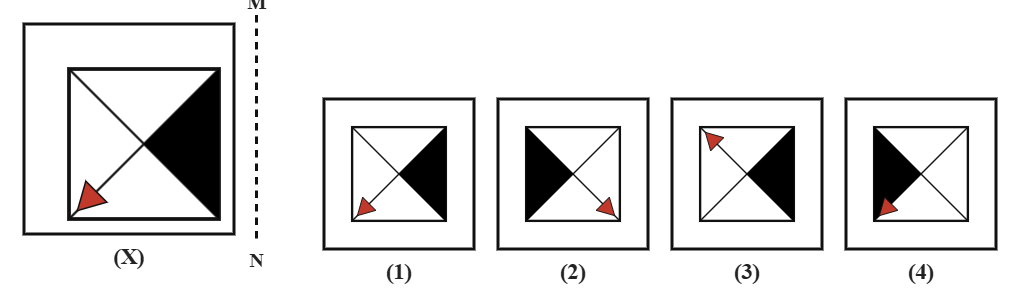
Observe the diagonally split square and the mirror line MN given below. Select the option that correctly shows the resulting mirror image.
Explanation
A mirror placed vertically at MN leaves the square outline and its two diagonals looking the same, but the shaded triangle swaps to the mirrored triangle and the small corner marker moves to the mirrored corner.
Option 1 is simply the original figure unchanged.
Option 3 shows the figure flipped top-to-bottom instead, as for a water image.
Option 4 has the shaded triangle correctly repositioned, but the corner marker was left at its original corner instead of also moving.
Option 2 correctly repositions both the shaded triangle and the corner marker, so it is the true mirror image.
Option 1 is simply the original figure unchanged.
Option 3 shows the figure flipped top-to-bottom instead, as for a water image.
Option 4 has the shaded triangle correctly repositioned, but the corner marker was left at its original corner instead of also moving.
Option 2 correctly repositions both the shaded triangle and the corner marker, so it is the true mirror image.
Shortcut Method
Vertical mirror (MN) → square and diagonals unchanged, shaded triangle and corner marker both move to mirrored positions
∴ Option 2 is the true mirror image ✓
∴ Option 2 is the true mirror image ✓
Question 16
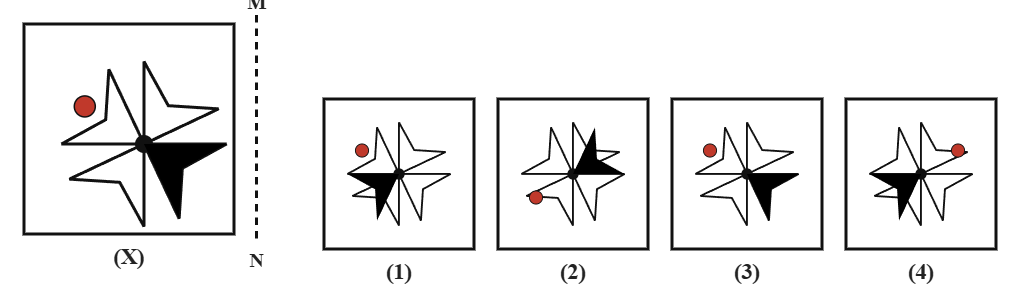
This four-bladed pinwheel figure (X) has its mirror MN placed to the LEFT this time, as shown below. Which option correctly shows its mirror image?
Explanation
A mirror placed vertically at MN leaves the pinwheel's spokes looking the same overall shape, but the shaded blade swaps to its mirrored position and the small red dot marker moves to the mirrored blade tip.
Option 1 has the shaded blade correctly repositioned, but the dot marker was left on its original blade tip instead of also moving.
Option 2 shows the pinwheel flipped top-to-bottom instead, as for a water image.
Option 3 is simply the original pinwheel unchanged.
Option 4 correctly repositions both the shaded blade and the dot marker, so it is the true mirror image.
Option 1 has the shaded blade correctly repositioned, but the dot marker was left on its original blade tip instead of also moving.
Option 2 shows the pinwheel flipped top-to-bottom instead, as for a water image.
Option 3 is simply the original pinwheel unchanged.
Option 4 correctly repositions both the shaded blade and the dot marker, so it is the true mirror image.
Shortcut Method
Vertical mirror (MN) → pinwheel spokes unchanged, shaded blade and dot marker both move to mirrored positions
∴ Option 4 is the true mirror image ✓
∴ Option 4 is the true mirror image ✓
Question 17
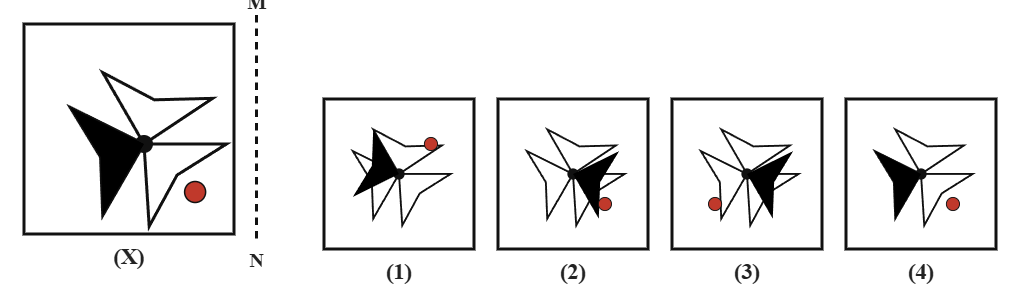
Given below is a three-bladed pinwheel figure next to a mirror placed along MN. Choose the option that correctly shows the mirror image of the figure.
Explanation
A mirror placed vertically at MN leaves the pinwheel's spokes looking the same overall shape, but the shaded blade swaps to its mirrored position and the small red dot marker moves to the mirrored blade tip.
Option 1 shows the pinwheel flipped top-to-bottom instead, as for a water image.
Option 2 has the shaded blade correctly repositioned, but the dot marker was left on its original blade tip instead of also moving.
Option 4 is simply the original pinwheel unchanged.
Option 3 correctly repositions both the shaded blade and the dot marker, so it is the true mirror image.
Option 1 shows the pinwheel flipped top-to-bottom instead, as for a water image.
Option 2 has the shaded blade correctly repositioned, but the dot marker was left on its original blade tip instead of also moving.
Option 4 is simply the original pinwheel unchanged.
Option 3 correctly repositions both the shaded blade and the dot marker, so it is the true mirror image.
Shortcut Method
Vertical mirror (MN) → pinwheel spokes unchanged, shaded blade and dot marker both move to mirrored positions
∴ Option 3 is the true mirror image ✓
∴ Option 3 is the true mirror image ✓
Question 18
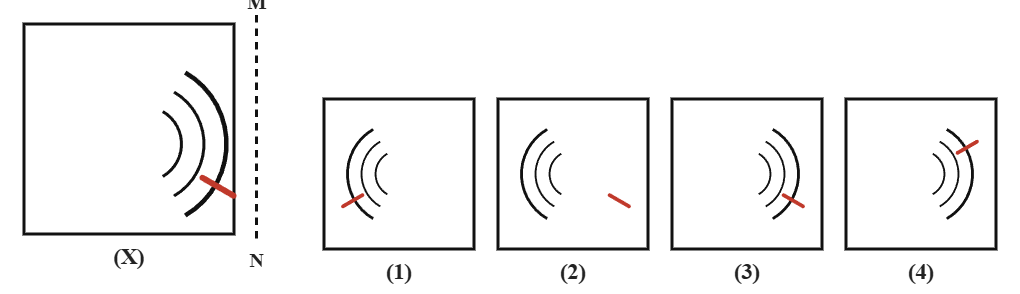
A fan made of three concentric arcs is shown as figure (X) below, this time with the mirror MN placed to the LEFT of it. Which of the four options is its correct mirror image?
Explanation
A mirror placed vertically at MN moves the whole arc-fan (which side it opens towards) to the mirrored side, and the small red tick mark on the outer arc also moves to its mirrored position along with it.
Option 2 has the fan correctly mirrored, but the tick mark was left at its original spot instead of also moving with it.
Option 3 is simply the original fan unchanged.
Option 4 shows the fan flipped top-to-bottom instead, as for a water image.
Option 1 correctly mirrors both the fan and the tick mark together, so it is the true mirror image.
Option 2 has the fan correctly mirrored, but the tick mark was left at its original spot instead of also moving with it.
Option 3 is simply the original fan unchanged.
Option 4 shows the fan flipped top-to-bottom instead, as for a water image.
Option 1 correctly mirrors both the fan and the tick mark together, so it is the true mirror image.
Shortcut Method
Vertical mirror (MN) → the whole fan (including its tick mark) reflects together to the opposite side
∴ Option 1 is the true mirror image ✓
∴ Option 1 is the true mirror image ✓
Question 19
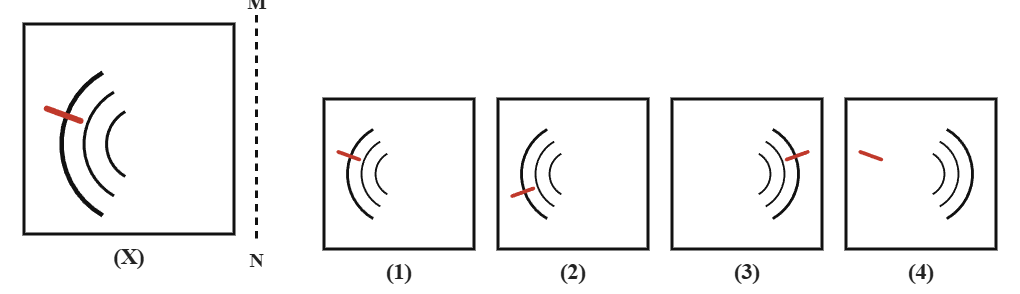
The sheet of figure (X) below, a fan of three concentric arcs, sits next to a mirror placed along MN. Which of the four options correctly shows the mirror image?
Explanation
A mirror placed vertically at MN moves the whole arc-fan (which side it opens towards) to the mirrored side, and the small red tick mark on the outer arc also moves to its mirrored position along with it.
Option 1 is simply the original fan unchanged.
Option 2 shows the fan flipped top-to-bottom instead, as for a water image.
Option 4 has the fan correctly mirrored, but the tick mark was left at its original spot instead of also moving with it.
Option 3 correctly mirrors both the fan and the tick mark together, so it is the true mirror image.
Option 1 is simply the original fan unchanged.
Option 2 shows the fan flipped top-to-bottom instead, as for a water image.
Option 4 has the fan correctly mirrored, but the tick mark was left at its original spot instead of also moving with it.
Option 3 correctly mirrors both the fan and the tick mark together, so it is the true mirror image.
Shortcut Method
Vertical mirror (MN) → the whole fan (including its tick mark) reflects together to the opposite side
∴ Option 3 is the true mirror image ✓
∴ Option 3 is the true mirror image ✓
Question 20
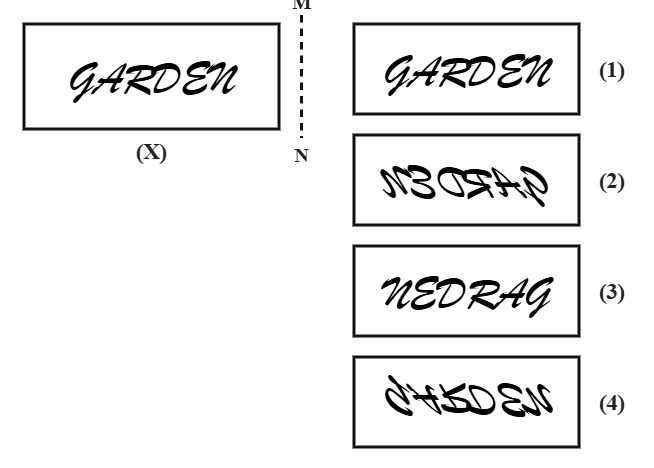
What is the mirror image of the word GARDEN when a mirror is placed along MN, as shown in the figure below?
Explanation
The mirror image of a word reverses the order of the letters AND flips each individual letter left-to-right -- both effects happen together, since the whole word is reflected as one shape.
Option 1 is simply the original word GARDEN, unchanged.
Option 3 shows the letters in reverse order (NEDRAG) but each letter printed normally, not flipped -- reversing the order alone is not the same as mirroring.
Option 4 shows the word flipped top-to-bottom (upside down) instead of left-to-right, which is not what a side mirror produces.
Option 2 correctly reverses the letter order AND mirrors every letter, so it is the true mirror image.
Option 1 is simply the original word GARDEN, unchanged.
Option 3 shows the letters in reverse order (NEDRAG) but each letter printed normally, not flipped -- reversing the order alone is not the same as mirroring.
Option 4 shows the word flipped top-to-bottom (upside down) instead of left-to-right, which is not what a side mirror produces.
Option 2 correctly reverses the letter order AND mirrors every letter, so it is the true mirror image.
Shortcut Method
Word mirror = letters in reverse order AND each letter flipped left-right, together
∴ Option 2 is the true mirror image ✓
∴ Option 2 is the true mirror image ✓
Question 21
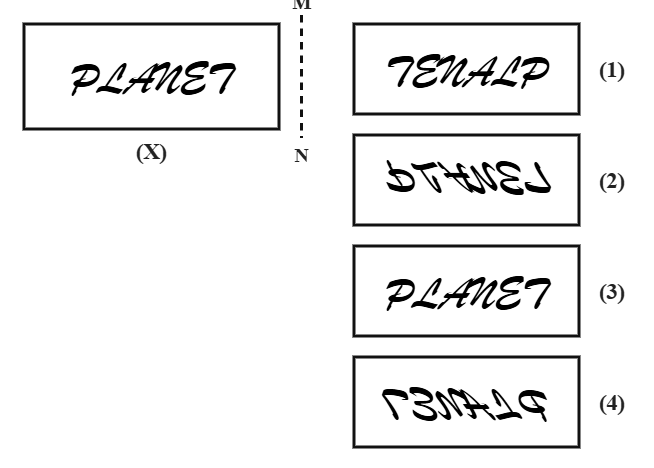
This time the mirror MN is placed to the LEFT of the word PLANET, as shown in the figure below. Which option shows the correct mirror image of the word?
Explanation
The mirror image of a word reverses the order of the letters AND flips each individual letter left-to-right, both together.
Option 1 shows the letters in reverse order (TENALP) but each letter printed normally, not flipped.
Option 2 shows the word flipped top-to-bottom (upside down) instead of left-to-right.
Option 3 is simply the original word PLANET, unchanged.
Option 4 correctly reverses the letter order AND mirrors every letter, so it is the true mirror image.
Option 1 shows the letters in reverse order (TENALP) but each letter printed normally, not flipped.
Option 2 shows the word flipped top-to-bottom (upside down) instead of left-to-right.
Option 3 is simply the original word PLANET, unchanged.
Option 4 correctly reverses the letter order AND mirrors every letter, so it is the true mirror image.
Shortcut Method
Word mirror = letters in reverse order AND each letter flipped left-right, together
∴ Option 4 is the true mirror image ✓
∴ Option 4 is the true mirror image ✓
Question 22
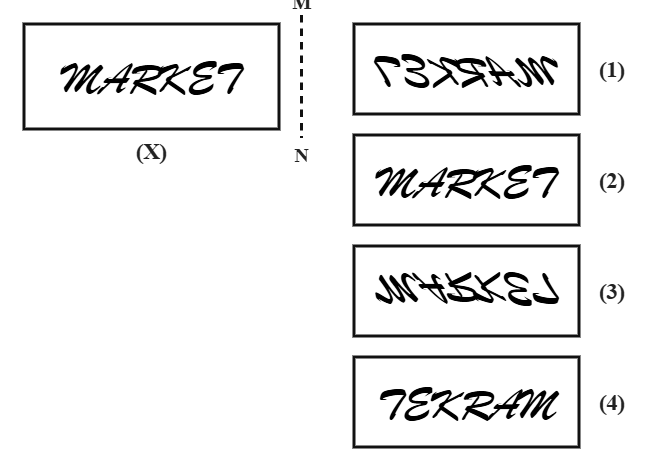
The figure below shows the word MARKET next to a mirror placed along MN. Select the option that correctly shows the mirror image of the word.
Explanation
The mirror image of a word reverses the order of the letters AND flips each individual letter left-to-right, both together.
Option 2 is simply the original word MARKET, unchanged.
Option 3 shows the word flipped top-to-bottom (upside down) instead of left-to-right.
Option 4 shows the letters in reverse order (TEKRAM) but each letter printed normally, not flipped.
Option 1 correctly reverses the letter order AND mirrors every letter, so it is the true mirror image.
Option 2 is simply the original word MARKET, unchanged.
Option 3 shows the word flipped top-to-bottom (upside down) instead of left-to-right.
Option 4 shows the letters in reverse order (TEKRAM) but each letter printed normally, not flipped.
Option 1 correctly reverses the letter order AND mirrors every letter, so it is the true mirror image.
Shortcut Method
Word mirror = letters in reverse order AND each letter flipped left-right, together
∴ Option 1 is the true mirror image ✓
∴ Option 1 is the true mirror image ✓
Question 23
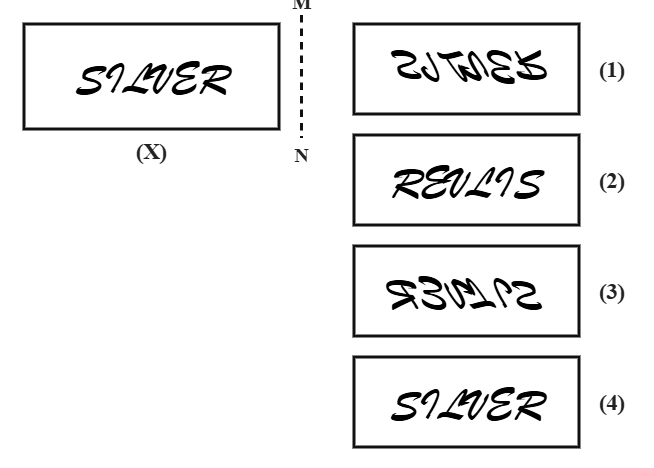
Given below is the word SILVER next to a mirror placed along MN. Choose the option that correctly shows the word's mirror image.
Explanation
The mirror image of a word reverses the order of the letters AND flips each individual letter left-to-right, both together.
Option 1 shows the word flipped top-to-bottom (upside down) instead of left-to-right.
Option 2 shows the letters in reverse order (REVLIS) but each letter printed normally, not flipped.
Option 4 is simply the original word SILVER, unchanged.
Option 3 correctly reverses the letter order AND mirrors every letter, so it is the true mirror image.
Option 1 shows the word flipped top-to-bottom (upside down) instead of left-to-right.
Option 2 shows the letters in reverse order (REVLIS) but each letter printed normally, not flipped.
Option 4 is simply the original word SILVER, unchanged.
Option 3 correctly reverses the letter order AND mirrors every letter, so it is the true mirror image.
Shortcut Method
Word mirror = letters in reverse order AND each letter flipped left-right, together
∴ Option 3 is the true mirror image ✓
∴ Option 3 is the true mirror image ✓
Question 24
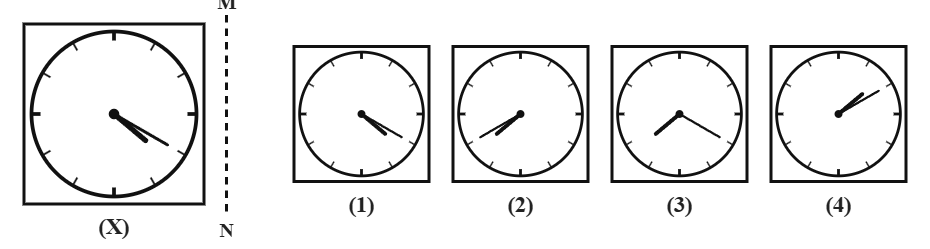
A clock shows the time given in figure (X) below, with the mirror MN this time placed to the LEFT of it. Which of the four candidate clocks correctly shows the mirror image?
Explanation
A clock reflected in a vertical mirror has both its hour hand and its minute hand mirrored: a hand sitting at an angle theta clockwise from 12 moves to the angle (360 - theta). This is equivalent to the well-known rule that the mirror time equals 11 hours 60 minutes minus the given time.
Option 1 is simply the original clock (4:20) unchanged.
Option 3 has the hour hand correctly mirrored but the minute hand left at its original angle -- only one hand was reflected.
Option 4 shows the clock reflected as if in water (top-bottom inversion) rather than in a side mirror.
Option 2 correctly mirrors both hands, showing the time 7:40, so it is the true mirror image.
Option 1 is simply the original clock (4:20) unchanged.
Option 3 has the hour hand correctly mirrored but the minute hand left at its original angle -- only one hand was reflected.
Option 4 shows the clock reflected as if in water (top-bottom inversion) rather than in a side mirror.
Option 2 correctly mirrors both hands, showing the time 7:40, so it is the true mirror image.
Shortcut Method
Mirror time = 11:60 - given time
11:60 - 4:20 = 7:40 (both hands mirrored)
∴ Option 2 is the true mirror image ✓
11:60 - 4:20 = 7:40 (both hands mirrored)
∴ Option 2 is the true mirror image ✓
Question 25
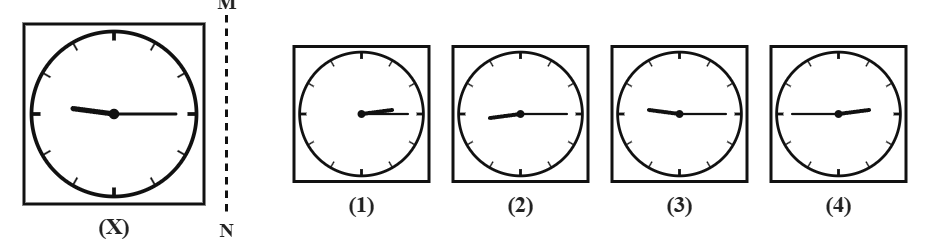
Figure (X) below shows a clock next to a mirror placed along MN. Select the candidate clock that correctly shows what the mirror would display.
Explanation
A clock reflected in a vertical mirror has both its hour hand and its minute hand mirrored: a hand sitting at an angle theta clockwise from 12 moves to the angle (360 - theta). This is equivalent to the well-known rule that the mirror time equals 11 hours 60 minutes minus the given time.
Option 1 has the hour hand correctly mirrored, but the minute hand was left at its original angle -- only one hand was reflected.
Option 2 shows the clock reflected as if in water (top-bottom inversion) rather than in a side mirror.
Option 3 is simply the original clock (9:15) unchanged.
Option 4 correctly mirrors both hands, showing the time 2:45, so it is the true mirror image.
Option 1 has the hour hand correctly mirrored, but the minute hand was left at its original angle -- only one hand was reflected.
Option 2 shows the clock reflected as if in water (top-bottom inversion) rather than in a side mirror.
Option 3 is simply the original clock (9:15) unchanged.
Option 4 correctly mirrors both hands, showing the time 2:45, so it is the true mirror image.
Shortcut Method
Mirror time = 11:60 - given time
11:60 - 9:15 = 2:45 (both hands mirrored)
∴ Option 4 is the true mirror image ✓
11:60 - 9:15 = 2:45 (both hands mirrored)
∴ Option 4 is the true mirror image ✓
Question 26
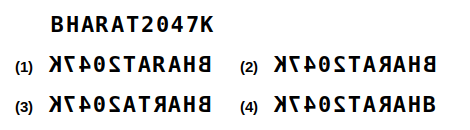
A mirror is placed on the right of the combination of letters and numbers given below. Choose the alternative that closely resembles its mirror image.
Explanation
When a mirror is placed on the right of BHARAT2047K, the order of the characters is reversed and each character is turned left to right. Only option (2) shows this. The solution image shows BHARAT2047K next to its mirror image.

Question 27
Imagine a mirror held on the right side of the given combination. Which of the alternatives (1) to (4) is its mirror image?
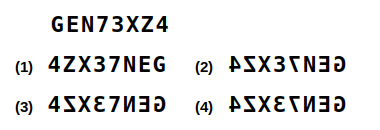
Explanation
When a mirror is placed on the right of GEN73XZ4, the order of the characters is reversed and each character is turned left to right. Only option (4) shows this. The solution image shows GEN73XZ4 next to its mirror image.

Question 28
The combination below is reflected in a mirror placed on its right. Select the alternative that most closely shows the reflection.
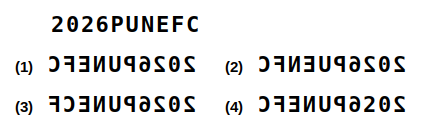
Explanation
When a mirror is placed on the right of 2026PUNEFC, the order of the characters is reversed and each character is turned left to right. Only option (1) shows this. The solution image shows 2026PUNEFC next to its mirror image.

Question 29
A word is given below with a mirror placed on its right. Which alternative closely resembles the mirror image of the word?
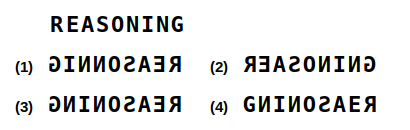
Explanation
When a mirror is placed on the right of REASONING, the order of the characters is reversed and each character is turned left to right. Only option (3) shows this. The solution image shows REASONING next to its mirror image.

Question 30
Look at the given word and imagine a mirror on its right. Choose the alternative that shows its mirror image.
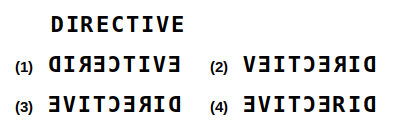
Explanation
When a mirror is placed on the right of DIRECTIVE, the order of the characters is reversed and each character is turned left to right. Only option (3) shows this. The solution image shows DIRECTIVE next to its mirror image.

Question 31
Select the alternative that most closely resembles the mirror image of the given word, with the mirror placed on its right.
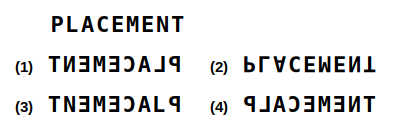
Explanation
When a mirror is placed on the right of PLACEMENT, the order of the characters is reversed and each character is turned left to right. Only option (1) shows this. The solution image shows PLACEMENT next to its mirror image.

Question 32
The small letters given below are reflected in a mirror placed on their right. Choose the alternative that closely resembles the mirror image.
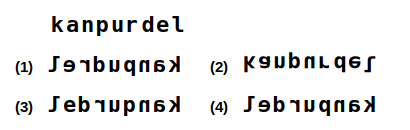
Explanation
When a mirror is placed on the right of kanpurdel, the order of the characters is reversed and each character is turned left to right. Only option (4) shows this. The solution image shows kanpurdel next to its mirror image.

Question 33
With a mirror on the right of the given letters, which alternative shows their mirror image most closely?
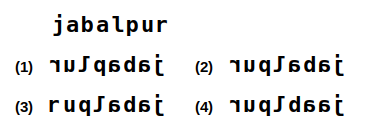
Explanation
When a mirror is placed on the right of jabalpur, the order of the characters is reversed and each character is turned left to right. Only option (2) shows this. The solution image shows jabalpur next to its mirror image.

Question 34
Select the alternative that closely resembles the mirror image of the given letters when a mirror is placed on their right.
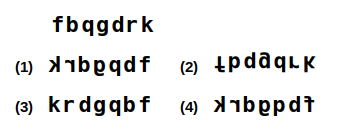
Explanation
When a mirror is placed on the right of fbqgdrk, the order of the characters is reversed and each character is turned left to right. Only option (4) shows this. The solution image shows fbqgdrk next to its mirror image.

Question 35
A mixture of capital letters, small letters and digits is given below, with a mirror on its right. Which alternative is its mirror image?
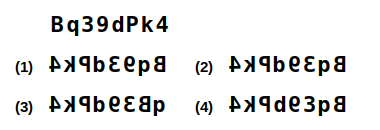
Explanation
When a mirror is placed on the right of Bq39dPk4, the order of the characters is reversed and each character is turned left to right. Only option (2) shows this. The solution image shows Bq39dPk4 next to its mirror image.

Question 36
Choose the alternative that closely resembles the mirror image of the given combination, if a mirror is placed on its right.
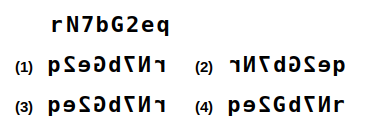
Explanation
When a mirror is placed on the right of rN7bG2eq, the order of the characters is reversed and each character is turned left to right. Only option (3) shows this. The solution image shows rN7bG2eq next to its mirror image.

Question 37
Imagine a mirror standing on the right of the combination below. Select the alternative that shows how it would appear in the mirror.
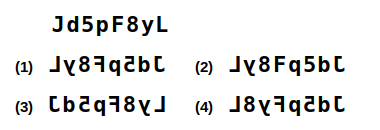
Explanation
When a mirror is placed on the right of Jd5pF8yL, the order of the characters is reversed and each character is turned left to right. Only option (1) shows this. The solution image shows Jd5pF8yL next to its mirror image.

Question 38
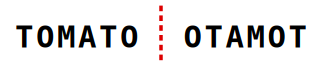
The word below is made of letters that look the same on both sides in some cases. With a mirror on its right, choose its mirror image.
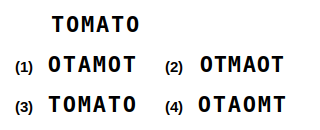
Explanation
When a mirror is placed on the right of TOMATO, the order of the characters is reversed and each character is turned left to right. Only option (1) shows this. The solution image shows TOMATO next to its mirror image.
Question 39
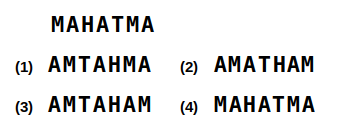
Pick the alternative that closely resembles the mirror image of the given word when a mirror is placed on its right.
Explanation
When a mirror is placed on the right of MAHATMA, the order of the characters is reversed and each character is turned left to right. Only option (3) shows this. The solution image shows MAHATMA next to its mirror image.

Question 40
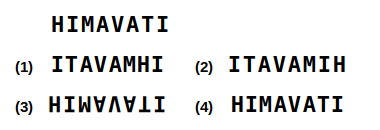
Which of the four alternatives shows the mirror image of the given word, with the mirror placed on the right?
Explanation
When a mirror is placed on the right of HIMAVATI, the order of the characters is reversed and each character is turned left to right. Only option (2) shows this. The solution image shows HIMAVATI next to its mirror image.

Question 41
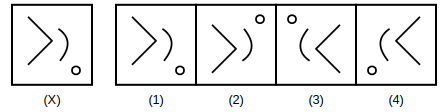
A mirror is placed on the right of figure (X). Choose the correct mirror image of the figure from the four alternatives.
Explanation
In a mirror placed on the right, the left and right sides of the figure change places while top and bottom stay the same. Only figure (4) shows this. The other figures are the original figure, its water image, a turned figure or a mirror image with one part not reversed.
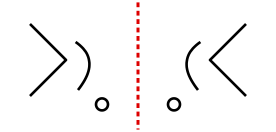
Question 42
Figure (X) is shown below with a mirror on its right side. Which alternative is its correct mirror image?
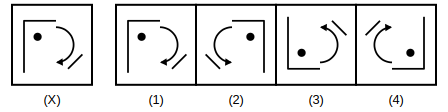
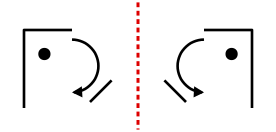
Explanation
In a mirror placed on the right, the left and right sides of the figure change places while top and bottom stay the same. Only figure (2) shows this. The other figures are the original figure, its water image, a turned figure or a mirror image with one part not reversed.
Question 43
Select, from the four alternatives, the figure that shows the mirror image of figure (X) when the mirror is placed on its right.
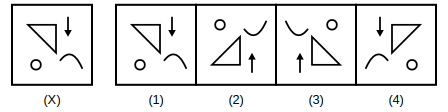
Explanation
In a mirror placed on the right, the left and right sides of the figure change places while top and bottom stay the same. Only figure (4) shows this. The other figures are the original figure, its water image, a turned figure or a mirror image with one part not reversed.