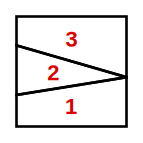
Type 1: Five figures numbered 1 to 5 are given, followed by four alternatives. Select the alternative that names the three figures which, when fitted into each other, form a complete square, equilateral triangle or triangle, as stated in the question. Type 2: A figure (X) with a gap is given, followed by four alternatives. Select the figure that fits exactly into figure (X) to form a complete square.
Question 1
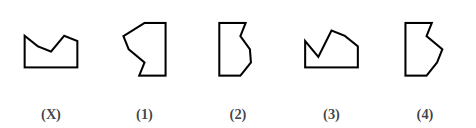
Pick the figure from the options that fits into Figure-X without any gap to form a complete square.
Explanation
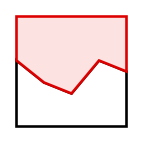
Figure (4), when turned, fits exactly into the gap of figure (X) to form a complete square, as shown in the solution image (the fitted part is shaded). Each of the other figures differs from the gap in one step or slope.
Question 2
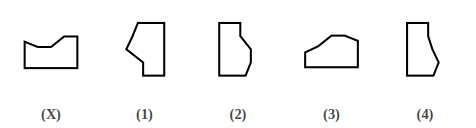
Identify the alternative that fills Figure-X exactly to give a complete square.
Explanation
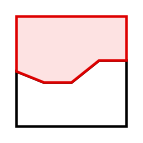
Figure (2), when turned, fits exactly into the gap of figure (X) to form a complete square, as shown in the solution image (the fitted part is shaded). Each of the other figures differs from the gap in one step or slope.
Question 3
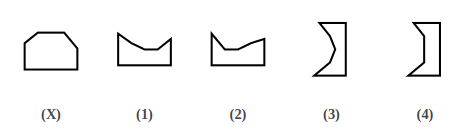
Find the figure among the four alternatives that fits Figure-X exactly and forms a complete square.
Explanation
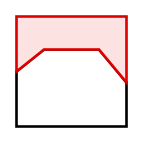
Figure (4), when turned, fits exactly into the gap of figure (X) to form a complete square, as shown in the solution image (the fitted part is shaded). Each of the other figures differs from the gap in one step or slope.
Question 4
Choose the alternative figure that, when fitted into Figure-X, completes the square.
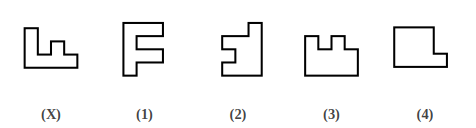
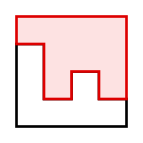
Explanation
Figure (2), when turned, fits exactly into the gap of figure (X) to form a complete square, as shown in the solution image (the fitted part is shaded). Each of the other figures differs from the gap in one step or slope.
Question 5
Which of the four alternatives fits exactly into the gap in Figure-X to make a complete square?
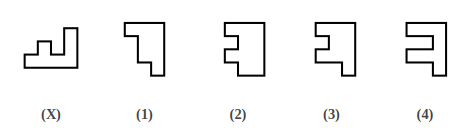
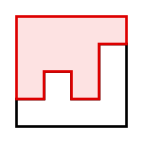
Explanation
Figure (3), when turned, fits exactly into the gap of figure (X) to form a complete square, as shown in the solution image (the fitted part is shaded). Each of the other figures differs from the gap in one step or slope.
Question 6
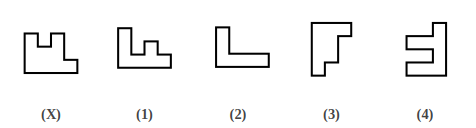
Select the figure from the four alternatives that fits exactly into Figure-X to form a complete square.
Explanation
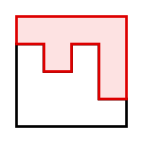
Figure (1), when turned, fits exactly into the gap of figure (X) to form a complete square, as shown in the solution image (the fitted part is shaded). Each of the other figures differs from the gap in one step or slope.
Question 7
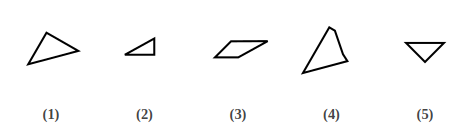
Choose the alternative that gives the three figures, out of the five shown, that together form a triangle.
Explanation
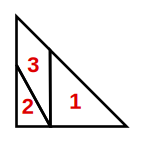
Figures 1, 2, 3 fit together to form the triangle, as shown in the solution image (the pieces may need to be turned). The remaining figures are of the wrong size or shape to complete it.
Question 8
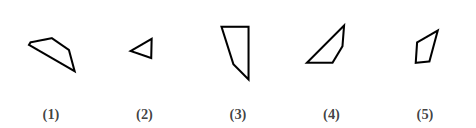
Which three of the five given figures can be joined to make a complete triangle? Choose the correct alternative.
Explanation
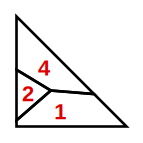
Figures 1, 2, 4 fit together to form the triangle, as shown in the solution image (the pieces may need to be turned). The remaining figures are of the wrong size or shape to complete it.
Question 9
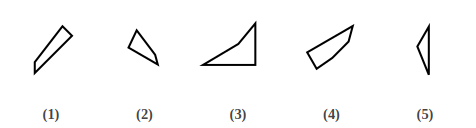
Three of the five figures below fit into each other to form a triangle. Select the alternative that names those three figures.
Explanation
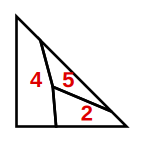
Figures 2, 4, 5 fit together to form the triangle, as shown in the solution image (the pieces may need to be turned). The remaining figures are of the wrong size or shape to complete it.
Question 10
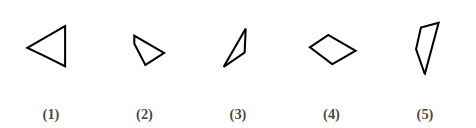
Pick the alternative that lists the three figures, out of the five shown, that fit together to make an equilateral triangle.
Explanation
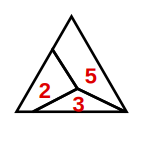
Figures 2, 3, 5 fit together to form the equilateral triangle, as shown in the solution image (the pieces may need to be turned). The remaining figures are of the wrong size or shape to complete it.
Question 11
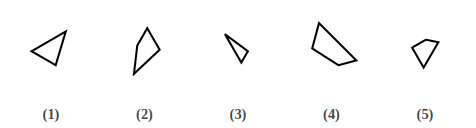
Which three of the five given figures, when joined, form a complete equilateral triangle? Choose the correct alternative.
Explanation
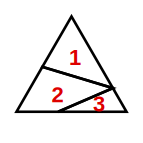
Figures 1, 2, 3 fit together to form the equilateral triangle, as shown in the solution image (the pieces may need to be turned). The remaining figures are of the wrong size or shape to complete it.
Question 12
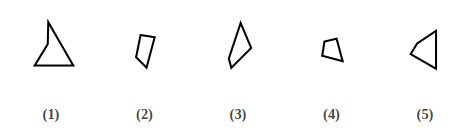
Three of the five figures below can be fitted together to form an equilateral triangle. Select the alternative that names them.
Explanation
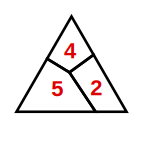
Figures 2, 4, 5 fit together to form the equilateral triangle, as shown in the solution image (the pieces may need to be turned). The remaining figures are of the wrong size or shape to complete it.
Question 13
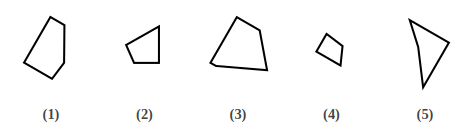
From the five figures given, find the three that fit into each other to form a square, and pick the matching alternative.
Explanation
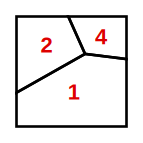
Figures 1, 2, 4 fit together to form the square, as shown in the solution image (the pieces may need to be turned). The remaining figures are of the wrong size or shape to complete it.
Question 14
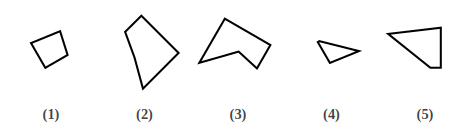
Select the option that names the three of the five figures which, when put together, make a complete square.
Explanation
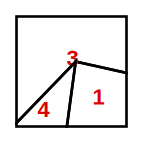
Figures 1, 3, 4 fit together to form the square, as shown in the solution image (the pieces may need to be turned). The remaining figures are of the wrong size or shape to complete it.
Question 15
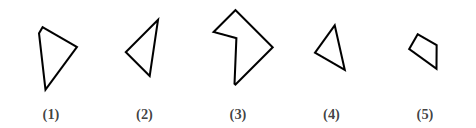
Out of the five figures below, three will join to form a complete square. Identify the alternative that lists them.
Explanation
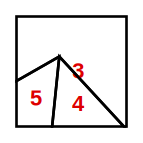
Figures 3, 4, 5 fit together to form the square, as shown in the solution image (the pieces may need to be turned). The remaining figures are of the wrong size or shape to complete it.
Question 16
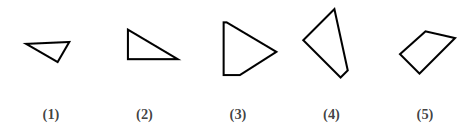
Choose the alternative that gives the three figures, out of the five shown, that fit together to form a complete square.
Explanation
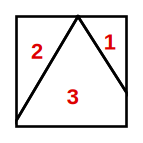
Figures 1, 2, 3 fit together to form the square, as shown in the solution image (the pieces may need to be turned). The remaining figures are of the wrong size or shape to complete it.
Question 17
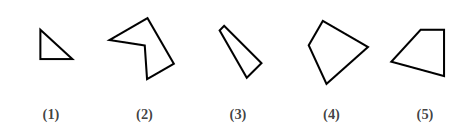
Which three of the five given figures can be fitted together to make a complete square? Choose the correct alternative.
Explanation
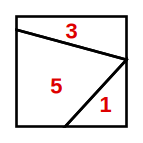
Figures 1, 3, 5 fit together to form the square, as shown in the solution image (the pieces may need to be turned). The remaining figures are of the wrong size or shape to complete it.
Question 18
Three of the five figures below, when fitted into each other, form a complete square. Select the alternative that names those three figures.
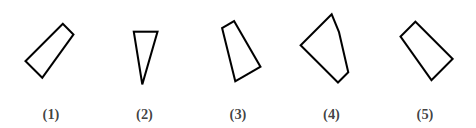
Explanation
Figures 1, 2, 3 fit together to form the square, as shown in the solution image (the pieces may need to be turned). The remaining figures are of the wrong size or shape to complete it.